The Recovery Bra Made for Breast Surgery: Holli Markwald of Prairie Wear
Summary
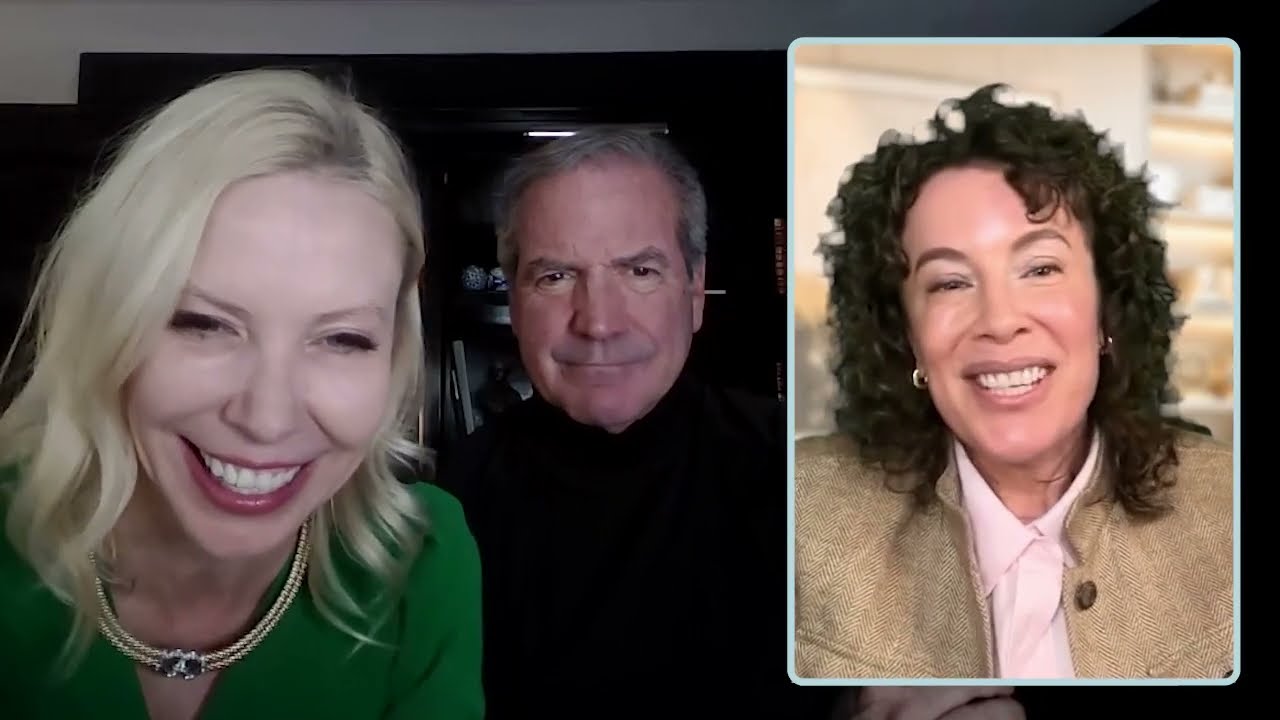
Host Kerry Berlet and Dr. Anthony Berlet welcome Holli Markwald, founder and CEO of Prairie Wear, the company whose bras are becoming the official recovery bra of Berlet Plastic Surgery.
Holli explains that the idea started when an oncological surgeon showed her the simple elastic tube top patients were sent home in and asked whether she could do better. After two years of research into technical knits, her team designed seamless bras with graded compression zones, coverage under the arm, and lighter compression where surgery near the nipple needs it. Because the cup size does not matter, the bra can go on in the operating room even if the final implant size changes.
She walks through the Prairie Wear line, including the Prima for full coverage after explant or oncological surgery, the Vita for aesthetic surgery, the Luma for the gym and the Arya for every day. She also talks about chemical-free, machine-washable fabrics, a bra that works for men after surgery, and the patient stories that keep her team going.
Dr. Berlet notes that most post-surgical bras push in the wrong places, while this one hugs and shapes the breast. Kerry shares that Prairie Wear will be offered to Berlet Plastic Surgery patients after surgery.
Transcript
Kerry: Hello, welcome to Once Upon a Surgery. I’m the host Kerry Berlet, married to world-renowned plastic surgeon Dr. Anthony Berlet. Today we have a very exciting episode. We have found a new bra that’s going to become the official bra of Berlet Plastic Surgery, created by our guest, Holli Markwald, the CEO and founder of a company called Prairie Wear. We are so delighted to have you, Holli. It’s such a personal thing, having the right bra in everyday life, and now to have one created for the purpose of recovery, I think is amazing. So I would love for the listeners to meet Holli, and talk to us a little bit about you and your company.
Holli: Awesome. Thank you so much for having me today. I really appreciate it. So, who am I and why am I here? Really, my entire mission since day one has been to help people and to create a positive impact in the world. And I have had amazing role models in my life to be able to take that and move it forward. This opportunity really came to me as opportunities come. I’m really great at business and operations, and I was successful in another business, and I wanted to do something that would create a visceral, tangible, positive impact in the world.
Holli: And as I was discovering what that could be, an oncological surgeon related to someone on our technical team just said, “Can you do better than this?” And it was a stretchy tube top thing with elastic that probably cost about a dollar to make, that they were putting on post-surgical patients for oncological surgeries. And after spending two years learning about all the different knits and incredible things that are available to create a better experience for people with compression on their body, I was like, “Yeah, we can totally do better.” And it’s personal. It’s a tangible, personal opportunity to support people when they’re going through recovery. I think you guys know and resonate with this: when people feel better, they get better. They do better. They’re more confident. They’re more secure. And I feel like that’s our alignment with what we’re both doing. We’re here to help people feel confident and secure so that they can do their best. And that’s what I really love about us being able to work together.
Kerry: It’s really great, because aesthetically they look amazing, but it’s also the way they feel. The patients have been raving about the different features, the clasp, all of the little pieces that go into the creation of the bra.
Dr. Berlet: Yeah, most of the bras are really ugly, and pushing in all the wrong spots. But this one hugs the breast, it looks beautiful. It gives that nice compression on the sides and helps shape the breast. They’re happy with it.
Holli: And for that patient during those key recovery times, whether that’s post-surgical or with lymphedema management or any number of things where you need additional support and coverage, you just feel better because you’re getting that comfort and security for the everyday activity that you need to be able to do. What I wanted to talk to you about, in terms of what you just said, where it hugs the body: that’s the gradient compression, and that’s the yarn, like with a triathlete uniform, where it expands and contracts with the body. That’s what our Huggers do. With that super amazing yarn, we developed over time, over 2 years actually of wear testing with different oncological surgeries, making sure we have that axilla coverage, making sure you have reduced compression on the areola if there’s nipple sparing or any surgery in the nipple area, where increased compression might cause ischemia, things like that. Those are things we took into account as we were grading in all of the compression. So that’s where we make it really simple for our patients and doctors to interface with an amazing bra, because we did the work and the science on the back end of the biomechanics of building a really good bra for post-surgical support.
Dr. Berlet: And the patients really seem to be happy with it.
Kerry: That’s amazing. And so with the different breast surgeries, if it’s someone having implants removed versus implants put in versus a major reduction, you have different designs for the different procedures, right?
Holli: For us, it’s about where the woman’s journey takes her. So if that’s a breast augmentation, I would go with our Vita. You want good support, but you also want to see all that good work that you just put into your body and that you want to celebrate. So our Vita is awesome for that. For someone getting an explant or oncological surgery, our Prima is amazing, because you’re going to get the full coverage and support that you need. But for us, it’s really about being a great choice for a woman on her journey, whatever that may be. Getting back into the gym after surgery can sometimes be a little bit anxiety-inducing, if you’re worried about incision sites or having something new in your body or on your body that you didn’t have before. So that’s another thing we address: confidence in doing your everyday, whatever that may be.
Kerry: It’s amazing. A woman’s breasts are such a big part of us as individuals. Your bra almost becomes like your best friend, in everyday life.
Holli: And for our doctors and surgical teams, when you have a patient that feels better, that’s good for everybody. Your positive outcomes are happening because your patients are using their compression, and they’re feeling great. It’s as simple as happy patient, happy doctor.
Holli: And then for the teams, to have something where they don’t need a special fit: the cup size doesn’t matter. Especially with a reduction, or sometimes an augmentation, the cup size can change slightly. When you’re doing your adjustments, you think, “This implant isn’t quite the size you had planned,” so it may be a slightly larger or slightly smaller implant than you originally anticipated. The cup size in our bras doesn’t matter, so in real time you can make that decision and it’s not going to change the bra size. And that bra is on the OR table underneath the chuck. You just drape it right down onto the patient, and that way they’re leaving feeling secure and supported. From the time they leave the table to when they go home, they’re in the same bra, and it’s amazing in terms of comfort and security.
Kerry: And how did you go about researching the materials, that yarn? Do you have any background in that?
Holli: It was a really cool journey. For 2 years, I was just deciding what I wanted to do with my time and my money, to be honest. What company do I want to do to help people? I travel a lot and go to a lot of meetings, and before Lululemon was as big as they are now, I wanted a jacket that you could wear on the airplane and then go anywhere in, and I couldn’t find it. So I started looking at what we could develop that could go from the boardroom to the gym to anywhere. And this is long before COVID, folks. And finding all the different technical fabrics that exist, I really got interested in how women typically accept things that are uncomfortable to wear, and men won’t. So then I got into men’s activewear, because they’re into the highest technical fabrics, the highest comfort levels, and they demand it. Whereas in women’s sportswear at the time, it was still fairly restrictive, hiking pants that don’t move with your body.
Holli: And in learning that, I understood that we had other options as women. You can get lift and support without an underwire, FYI. You can wear something next to your skin that is going to breathe, that’s Oeko-Tex certified, so it’s chemical-free. You can do all those things, but I didn’t know that. I didn’t even know that existed. So that’s been one of the biggest learnings over that 2-year period: there are a lot of things out there that can make your experience in that first base layer a lot better. So that’s where I ended up in the bra business, which by the way, my background is in residential construction, large developments.
Kerry: Architecture.
Holli: I learned a lot on a construction site. And I learned operationally that all businesses are very similar. It’s your product that changes. So I was able to apply what I’ve learned to this opportunity to really positively impact women specifically. And the other thing for me was that you can actually create something that’s better for the planet at the same time. Is it easy? Is it less expensive? No. But is it worth it? Yes. That was really one of the key core moments of creating this product: better for the body, but also better for the planet. And inherently, it’s something that as a woman you have next to your skin all the time, and it’s not emitting chemicals. For me wearing it every day, maybe less important, but for someone who’s just gone through surgery, really important.
Kerry: You don’t even think about that, right?
Holli: You don’t. And this is just one more layer of those positive outcomes. They’re latex-free, they’re Velcro-free, so you don’t get that gross microbial stuff on it. It stays clean and fresh on your patients. It’s just a lot of wins with a better product, for sure.
Kerry: And it’s a little bit of an investment, but when you think about something that you’re wearing every day, and that it actually has this function in addition, it’s worth it, for sure.
Holli: And I think for your patients, the value is durability as well, the way it ages over time. I look at a good bra like a good surgery: it should last you for a long period of time. What we see is that if you went to something maybe less expensive, it may not last as long, it may not wear as well over time, or it may not work very well.
Kerry: And then you buy a new one anyway, right?
Holli: Or you have to go back to a different doctor and get a revision surgery on what wasn’t done properly the first time, for the discounted version. There is something to investing in quality, and to me that pays back not only personally but also to the planet overall. You’re using fewer resources, less time, less money, all of those things.
Kerry: And there’s not any special way to wash them, right?
Holli: Oh my goodness, no. In the early days, and I still do, I wear test everything, and I do not like to pay attention to anything in the machine wash world. Everything goes in the same washing cycle. All of our bras are machine wash and dry. There’s absolutely no special care. They’re really easy to look after. It’s like your activewear, so no bleach or fabric softener, because you don’t want to lessen the compression, but machine wash and dry. That’s another plus, not only for the patient but for our surgical teams, because patients are going to keep wearing it. They can keep it fresh, they can keep it on.
Kerry: That’s amazing. This is such an exciting venture. Do you have the next thing in mind that you want to do?
Holli: I have the coolest team in the world. I will say that completely biased. They are amazing. On our technical team, we have the OGs of seamless knit. Most bras are cut and sew, where you see a cut-and-sew band, and it comes in about 50 different pieces. You’ll see 52 sizes to do one size range because of all the different cup sizes. The reason companies don’t do seamless knit is that it’s expensive and highly technical. You can’t do it cheap. So in the early days we brought on the best of the best in seamless knit, Dr. LaJean Lawson, who was part of the 1986 Jogbra crew that did the first production sports bra for women. So we have her on our team, and they’re pushing me every day: “How can we do this better? What can we do next?”
Holli: We’re working with tactical athletes and with a research team in the UK on tactical athlete bras that can hold breast protection. But for me, anything that we make, I want anyone to be able to wear. So we have a high demand on our technical team to create something everybody can wear, and that can also specialize as you need it. A tactical athlete doesn’t need to wear breast protection every minute of every day. And who wants to get a special bra for one or two days? Most post-surgical bras, you wear them for one or two days and then landfill. How do you reuse that? So for me, one of the biggest compliments is when I see one of our bras on Poshmark or eBay or resale. I love that. It means we get to keep helping someone with the same bra.
Holli: So what do we have on the horizon? We’re always looking at different technical designs and different products. We’re consistently wear testing and doing R&D. But you may have noticed we keep a very tight SKU line, which means we have very few styles, very few colors. That’s really purposeful. It’s easier for our customers and our surgical teams, but also for the environment. The more colors and styles you add, the more you tax production and the environment. It’s kind of like your favorite restaurant, with that one-page menu that is so perfectly curated that you know you’re going to love something on it, and you don’t need to see a hundred things. So when something new comes into our world, it’s very intentional. We just released our Arya, which is a back-closure bra, no front zip, for everyday wear. That was done over a two-year period. We wear test on every body size, extra small to 3X, because everybody has a different modulus, and we need our bra looking good and feeling good on all of those body types. And similar with cup size, we want to make sure it fits from a B cup to a J cup. To do that, we have to be really intentional with every design choice, including where we put the compression zones.
Kerry: It really is a science. To have the same compression zones no matter how large or small you are, that’s pretty amazing.
Holli: It is. And I don’t want to get too technical, you guys, but this is what we’re super jazzed about at Prairie: we get to take these really complicated designs and apply them to making it easier for patients to get something awesome, or for someone to get it for every day. We started with just oncological patients, and then that went to aesthetics, because so many of our oncological patients were getting reconstruction: flat reconstruction, reconstruction with implants, all kinds. We had to accommodate all those different surgeries, and we learned a lot. We adjusted our compression zones. And then we learned, well, we work with a lot of plastic surgeons, so we need to create a bra, the Vita, that’s more appropriate for an aesthetic surgery or reconstruction that maybe needs less compression and less coverage, but still good coverage. So that’s where the Vita came from. And then it’s been a succession. The Luma: we needed a bra that would work well in the gym for someone who needs additional support. And then the Arya for everyday. So it’s been a really fun journey to be able to support every woman on her journey.
Kerry: That’s awesome. And how did you come up with the names for the different ones?
Holli: Well, Hugger originally came up because “bra” and “binder” are just no fun at all, and we are a super fun team. When we were deciding the name, Hugger was definitely top of the running, also because we do wear tests, thousands and thousands of them at this point, and one thing we kept getting back is “it feels like a hug.” Lots of hugs, lots of smiley face emojis and hearts. So that’s really where Hugger came from. It’s literal, but it’s also really awesome to say you’re going to get a Hugger after your surgery.
Kerry: I love it. That is clever. Makes me want one. Do you have any for men?
Holli: Actually, the Prima, because the cups are all removable.
Kerry: For gynecomastia, right?
Holli: Gynecomastia, top surgery, but also 2% of breast cancer patients are men, and they need a garment post-surgically as well. One of my favorite images from our early days of wear testing was a 6’2″ Marine after his oncological surgery. He’s in his hospital bed, and he shouldn’t have had this, but he had a cigar and his Prima on, just hanging out after surgery. So yes, our Prima is unisex and is regularly used that way.
Kerry: There is a need. Wasn’t there a Seinfeld episode about [inaudible]? Maybe for the male version you can have a manly name.
Holli: Well, we’ve had several thoughts about what that could be, and I’m sure everybody’s already thinking this. We’ve been told by many that we need to make the Hugger Bro. We actively ask for feedback, and we get a lot. I love it. Anything someone wants to share, a color, a style, something they like or don’t like, we love all of it.
Kerry: That’s fun. Do you have a favorite story or feedback that comes to mind, of someone who feels like you really changed their life?
Holli: I resonate with something that was said on one of the podcasts. I don’t know if I should say Anthony or Tony, but when Kerry asked what was your favorite case, your best case, you said, “I always say it’s my last one.” So for me, is there something memorable? Every day I wake up, and we have an amazing client solutions team that works with our customers all the time, and I always look at the feedback from the day. That’s where I start. I’m here to help people, so our customers are number one. And I still remember the first time I saw this: “You changed my life. I was in so much pain. I couldn’t lift my child. I didn’t want to go out to buy groceries. I was afraid to go to the gym. I couldn’t sleep because I thought I’d dislodged my drains.” We still hear a lot that women are sent home in a non-compressive post-surgical bra or with just bandages. That still happens a fair amount. So imagine trying to sleep with a bandage and some drains.
Holli: I still hear something of that nature, I would say, every day: I was in pain, I couldn’t get relief, I was afraid to run, or I was afraid to go back to play hockey. We had a hockey player that it really changed her life, to be able to go back and play, and she wears the Prima to play, just for that full coverage. Those are my favorite stories. And it’s always incredible to me that someone wants to send us a picture of them in their bra, because they feel that confident: “I feel awesome in this after surgery,” or during lymphedema treatment, whatever the journey. Nursing moms were another one I didn’t even think about, with the breast size changing significantly from morning to night or hour to hour. That’s another opportunity for our bra to support someone whose cup size fluctuates. Most bras have an encapsulated cup, so it’s not going to expand and contract with the cup size. Or post-surgical swelling, where you need a slightly larger size post-surgically that then decreases over time. Things like that have informed what we do, and it’s our greatest joy that we get to help people regardless of their journey.
Kerry: That’s amazing. I forgot about those days when I was nursing. You go up a full cup size within the day, and you still wear the same ugly nursing bra. My daughters are teens now, so that was a long time ago, but it’s nice there’s a better solution.
Holli: I love the organic way this connection came together, you guys. It was not contrived. It was just an organic opportunity, and I love when things like that happen and things align in life. One of the things that made me confident in having this conversation is that both of you have talked very specifically about being here to support women in their confidence and their security. And I know I started with this, but this is where I’m at right now too: this is not changing someone. This is enhancing who they are. And I really love that.
Kerry: I just want to thank you so much, Holli, for coming on and for your time. Cheers. And I want everyone to know that Prairie Wear will now be the official bra of Berlet Plastic Surgery. We will have it available for our patients after surgery, and we have an affiliate link where you can purchase whichever variety suits you. We are so excited for this. We also have some upcoming podcasts where patients are going to talk about not only their surgery but also their experience wearing Prairie Wear. So thank you so much. We are so appreciative, and I love how we connected. I think there’s so much alignment in both of our missions. Thank you, Holli.
Holli: Thank you guys so much. Wishing you a great day.
Ready to start your own story?
Meet with Dr. Anthony Berlet to talk through your goals and options.
Request a Consultation (332) 232-5630