Jimmy Nolan: Osteosarcoma Survivor and One-Armed Golfer Reunites With Dr. Berlet
Summary
Jimmy Nolan was 15 when he was diagnosed with osteosarcoma, an aggressive bone cancer. When the tumor came back a year later, surgeons at University Hospital (UMDNJ) removed his right arm, shoulder blade and collarbone. Dr. Anthony Berlet was the plastic surgeon on that 1999 team, alongside orthopedic oncologist Dr. Joe Benevenia and a thoracic surgeon, and his job was to close the large wound the surgery left behind.
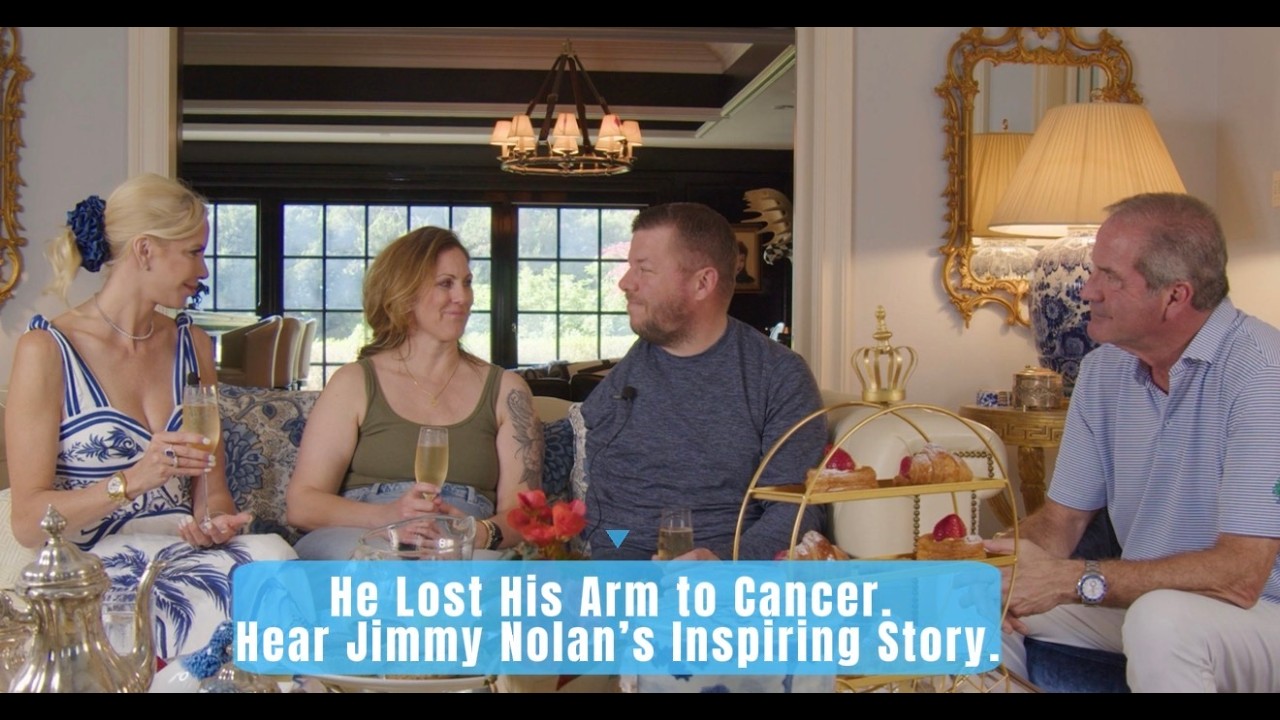
More than 25 years later, Jimmy sits down with host Kerry Berlet. He has been cancer-free since August 10, 1999. He relearned everything with his left hand, played varsity tennis by his junior year of high school, and now plays golf with the North American One-Armed Golfer Association and in a men’s softball league. He works as a police dispatcher in his hometown.
Dr. Berlet explains why sarcoma was treated with surgery at the time and describes the limb salvage and microsurgery cases he did in those years, and admits he could not beat Jimmy at golf.
Jimmy’s wife, Leslie, and their two young sons join at the end. Leslie talks about how proud she is of him, how she encouraged him to join the one-arm golf trips, and her hope that his story reaches someone facing limb loss.
Transcript
Kerry: Hello. Welcome to season 3 of Once Upon a Surgery. I’m the host Kerry Berlet, wife of world-renowned plastic surgeon Dr. Anthony Berlet. Today we have an incredible episode. We are now connecting a case from when my husband was operating back at University Hospital, UMDNJ. This was a case where he was involved in the amputation of a cancer patient who was a young boy at the time, a teenager. And I’m so excited to introduce you to my guest, Jimmy Nolan, and for you to hear his story with me. So welcome, Jimmy. Thank you so much for coming. It’s crazy that we got connected, and I’m thrilled to have you here.
Jimmy: Happy to be here.
Kerry: I’ve been married to my husband, it’ll be 8 years, and I know all these stories that he’s told me through the years. And you’re the earliest patient of his that I’ve met so far. It’s really interesting to be connected. So to start off, tell us your story. You were diagnosed with osteosarcoma, you said?
Jimmy: Yes. I was 15 when I was first diagnosed. I had my scapula replaced. And then a year later it grew back, and instead of radiation or any chemo, they just took the arm and scapula and clavicle.
Kerry: Did they think that was the only option at that point, because of how it had come back?
Jimmy: I believe they didn’t think the tumor would react to radiation or chemo.
Kerry: I can say, I had a nephew on my ex-husband’s side of the family who had an osteosarcoma in his leg. He was diagnosed at 17, and at one point they were talking about amputation, and he chose not to, and he passed away at age 19. So I assume that was definitely the right choice.
Jimmy: It was quick. They told me what was going on, and two to three weeks later was the surgery. I was still under my parents’ guidance.
Kerry: Right. But then I saw you in a video, and you became a tremendous tennis player after this.
Jimmy: I love sports, and it’s something I could pick up again. So I was learning everything lefty.
Kerry: That’s crazy, because you were originally right-handed, so that must have been a whole adjustment.
Jimmy: An adjustment, but being 16, I don’t know if easier is the word, but if it happened when I was older, I think adapting would have been more difficult.
Kerry: And with the surgery that my husband was involved with, you mentioned there were three doctors. There was an orthopedic surgeon.
Jimmy: Yeah, Dr. Joe Benevenia. Your husband was the plastic surgeon, and I had a chest surgeon. I forget his name, but it did start with a B too.
Kerry: We’ll have my husband on to explain exactly what he did. But since that point you’ve been cancer-free?
Jimmy: Yes, since August 10th, 1999. I believe with sarcoma, if it comes back once, then you should be good. So I went years with checkups, but none recently.
Kerry: Wow, that’s amazing. So you went from tennis, and now you’ve evolved into a golfer, right?
Jimmy: I took up golf for some reason. I like being frustrated.
Kerry: And lefty. We watched this video, and you have this tremendous golf swing.
Jimmy: There are a lot of adaptive golfers out there that are much better than me. But it’s a great community. I play for a one-arm golf organization. We play throughout the country. There are also groups for kids and amputees and cerebral palsy, anyone with any kind of limb difference.
Kerry: I think sports are such a great way to cope with this adjustment to your life. My close friend’s husband is the head of an organization called Move United. It’s similar: amputees, like people from the military, get involved in sports. These people are athletes and competitive, and I think that’s great.
Jimmy: Playing any kind of adaptive sport with other people with their own stories, learning their stories and meeting their families, it’s a great bond, and competing with others.
Kerry: And have you met younger cases? I’m sure you could be an inspiration to them.
Jimmy: We do clinics for amputees or kids who were born without a limb, and the energy is amazing. For them to see older generations and other people with the same kind of disability gives them more confidence to keep going.
Kerry: Definitely. I think perspective is so important. We all have our own situations. I have a niece who has a rare condition. It’s a condition where your body is slowly growing a second skeleton, so you lose mobility completely. In 2021 she had a fall and lost movement in her leg. Unfortunately, with her condition you don’t have the option to do sports, but she’s discovered things like robotics and other ways to compete. It’s nice to have a community to relate to. So you became a tennis player, and you’re now how old?
Jimmy: I’m 43 now. I was 16 when the operation happened. I played tennis in high school.
Kerry: Had you played tennis before?
Jimmy: No. I just took it up and wanted to be good at something and learn the sport. August 10th, ’99 was the operation, and I was playing varsity tennis in March of 2000. My junior year in high school.
Kerry: That’s amazing. And how were the people in your high school?
Jimmy: A lot of help. A big support system. I grew up in Riverdale in Morris County, and we went to Pompton Lakes High School, growing up playing with everyone from town. Plus my church, St. Mary’s in Pompton Lakes, where I volunteered and worked. When everything happened, they were right there for me and just acted like nothing ever happened.
Kerry: I think it’s great when you have a community that embraces you. You’re still you. And how fortunate you are to survive cancer. It’s a huge adjustment, but it sounds like you really thrived.
Jimmy: Definitely adjustments. Still adjusting.
Kerry: And now you’re married with two kids and have a career. How did you meet your wife? And you’re a police dispatcher, is that right?
Jimmy: For the police department in the town that I grew up in. I’ve been there since 2005. I met my wife at a local bar in Riverdale. She was out with her friends, and I saw a pretty girl, walked up to her and kept trying to make her smile.
Kerry: And what year was that?
Jimmy: I met her in November of 2015. And we actually got engaged on this day. And then we got married in March 2018.
Kerry: Amazing. Do you guys drink champagne? We’ll have to toast to it. And then we’ll have her on, and your two sons. And with the two boys, how has that been as a father?
Jimmy: That was the biggest adjustment with having one arm, trying to raise kids. Without my wife, I would never have been able to do it. She’s our rock, and she’s been with the kids for four and a half years almost every day. I do my best to be there for them and do everything I can to help out. But it’s tough. But it’s worth it. It’s the hardest and best job ever.
Kerry: I had seen your interview, where one of them started to notice.
Jimmy: My youngest is starting to notice now. He’s just over two, and he’ll say, “Daddy has one less arm.” So he’ll go through that phase for a little bit, but it doesn’t faze him. We have a good time playing every day.
Kerry: It doesn’t define you. That’s real life. And I’m sure kids make comments too.
Jimmy: A lot of questions, which is fine. It’s better than just staring. It’s been years of feeling awkward around people. You don’t know what people are thinking. Some people are mean, some people are nice. But that’s life, and you just go along with it. Try not to get down.
Kerry: Well, good for you. I’ve been in this community of people who’ve had different things happen in life, and I feel like it brings you to another level. Their resilience is so inspiring. It’s nothing you asked for, but it seems like you’ve thrived. I wonder if you’re better than my husband at golf.
Jimmy: We’ll see. We belong to two clubs. We’ll have to take you to one.
Kerry: And your boys are still young. Do they do any sports?
Jimmy: We have our oldest in soccer, but it’s just a swarm of kids running around right now. He’s only four. Hopefully he gets into it.
Kerry: How do you think going through this changed your outlook on life?
Jimmy: There are pros and cons. At first you think everything bad is going to happen to you. But going through life with a disability and playing sports and seeing people’s reactions to you handling life just like everyone else, moving forward and succeeding, it’s a blessing. And in the golf organization I play in, the North American One-Armed Golfer Association, all our stories are truly inspirational, and it’s so genuine being with them, hearing their stories, seeing their good and bad, what’s going on in life and how they handle everything. It takes a lot of help. Seeing someone else struggle, you try to help them; you struggle, and they help you. That’s what it should be. Treat everyone the way you want to be treated.
Kerry: I’m sure it’s great to have that connection with others in a similar situation.
Jimmy: It’s phenomenal. And I have my wife to thank for that, because I never wanted to go on these golf trips. She got me to go on my first trip back in 2020. She said, “You really need to go play with these guys.”
Kerry: That’s a good partner. A lot of women I know aren’t encouraging their husbands to go on golf trips.
Jimmy: It’s not easy for her, especially with the kids now, but she does a great job.
Kerry: And what do you think is the biggest misconception people have about you having one arm?
Jimmy: That I’m not going to be able to do a lot of things. Always asking if I need help. That’s a big thing.
Kerry: Do you not like to be asked if you need help?
Jimmy: It all depends on how the day’s going, really. Being asked could be annoying, but obviously it’s also helpful. But I can be stubborn.
Kerry: I’m sure you can still drive.
Jimmy: For sure. I got my license test right on schedule. I took it twice a day. I took it with a, you’re supposed to have a knob on the steering wheel. It’s called a suicide ball. And I took it with the knob. And my dad said, “Do you mind if he takes the test without it?” And I took it without it, and they let us drive off that day.
Kerry: Great. Are there other activities that people are surprised by, other than your sports?
Jimmy: Fun fact: I delivered pizza from when I was 17 to 22. Just stack it up and ring the doorbell with the box.
Kerry: And I imagine your arm is incredibly strong too.
Jimmy: It’s strong, but I’m 43, and I’ve been doing it for 27 years. So not every day is it feeling strong.
Kerry: And the fact that you were originally right-handed. I’m left-handed, actually. That must have been a challenge, even writing.
Jimmy: Even for work, I type more than write, just so people can read it.
Kerry: Well, I have horrible handwriting, so I can definitely relate. That’s a thing with left-handers. It’s nice that you can do tennis, you can do golf, all these sports.
Jimmy: I’m in a men’s softball league. I still play every Tuesday night. So right now it’s golf and softball.
Kerry: Amazing. You make me feel lazy. And you work nights with this job, I guess?
Jimmy: I rotate. I work 1 month of nights, 1 month of days.
Kerry: And especially with the kids. And how did you end up following that path, dispatching?
Jimmy: A lot of my friends were in law enforcement, and a position opened for dispatching, and I took the job so I could figure out what I wanted to do with my life. And I stayed with it. Every day is different. It’s good and bad working where you grew up. You see the good and the bad.
Kerry: Well, it’s so nice to meet you. I want to have my husband on to talk about what’s involved with this kind of surgery, and then I want to meet your wife and your two beautiful children. And I have some cookies for them.
Kerry: Okay, so we are here with Dr. Berlet and his patient from 27 years ago. It’s amazing. You were at University Hospital at this point, early on in your career. Can you explain what exactly needed to be done in this particular surgery?
Dr. Berlet: So Dr. Benevenia is an orthopedic surgeon at University Hospital; currently he’s the chief there. He’s a specialist in orthopedic oncology, which basically means cancer of the bone, and soft tissues actually. He does both of those things. And we worked together very closely for many years. I also called myself the vampire surgeon, because he’d be working all day and I’d be working all night to finish up. In this particular case, Jimmy had osteosarcoma, which is a bone cancer and can be very deadly, and he sacrificed his arm for that. They took his entire shoulder girdle away, including his clavicle, his scapula and all the bones of the shoulder. And they left a pretty big hole, right down to the rib cage, so we also had a thoracic surgeon there as well. So between the three specialties, we got it taken care of.
Kerry: And he said with this case, chemo and radiation weren’t an option. And with that particular cancer, once you’re through it, you’re in the clear?
Dr. Berlet: Sarcoma as a cancer does not respond well to radiation or chemotherapy, for the most part. It’s a surgical cancer. Today there are probably a few other modalities that may work a little better, but at the time, surgery was it, and it was aggressive surgery, because I’m sure the bone cancer involved the muscles or the tendons around it. Once it does that, it’s very difficult to salvage anything.
Kerry: As I mentioned, I had a nephew on my ex-husband’s side who had osteosarcoma in his leg, and he opted not to amputate the leg and unfortunately passed away at a young age. So this was the right choice, obviously. It’s hard to make that adjustment, but now he has a very fulfilling life.
Dr. Berlet: It’s hard to imagine that someone has to make that decision in the first place. And it was his dominant arm and hand. But the point is, we got the cancer out completely, a very aggressive resection, and it left a big hole. My job is basically to fill the hole.
Kerry: And he showed you the scar now, 27 years later. Did that bring back memories?
Dr. Berlet: It brought back a lot. That was one of those things we did probably once or twice a week. We did a lot of crazy stuff. It often involved microsurgery, or we would do limb salvage, where we would take a section of the bone out, maybe even the knee, and that whole section would be replaced with titanium. But that would also leave a lot of soft tissue damage, and my job is to wrap the bone with muscle, whether it’s from the back or the belly or wherever it might be.
Kerry: Okay, now, important question. Do you think you could beat Jimmy at golf?
Dr. Berlet: The answer to that is absolutely not. I was watching his swing and even his putting, and it embarrasses me.
Kerry: You’re a right-hand golfer, right? Imagine trying to golf like that.
Dr. Berlet: He does it all, and he does it with a forehand.
Jimmy: I tried a backhand for years. There are a lot of our one-arm golfers who swing backhand and do very well. I just hit the ball straighter forehand.
Dr. Berlet: Impressive. It’s like skimming a stone, the idea with most swings. I’m severely right-handed, so I can’t get anything right, but the timing is impeccable. It’s like throwing a ball in some ways. He’s mastered it, and to have that stability and control is really impressive, especially with your non-dominant hand on top of it. It’s super athleticism.
Kerry: So you play with left-hand clubs, though?
Jimmy: Yeah. I putt righty, though.
Kerry: Well, you have to take him golfing.
Dr. Berlet: It’s 100% happening.
Kerry: Is this the first patient you’ve ever reconnected with from that type of surgery?
Dr. Berlet: The answer is no. No, but it was just interesting. The world’s a small place.
Kerry: And you’re in the same area.
Dr. Berlet: But I did a lot of surgery, a lot of limb salvage. I did one operation where I replaced the radius of an arm, for a Ewing’s sarcoma, with a joint from actually a leg. It’s the fibula bone on the outside. It’s a smaller bone. It’s vestigial, which means our ancestors needed it more than we do. But if you can spare the ankle, then you can take this whole part of the bone here. And actually this was the first time that we had ever taken the entire bone all the way up to its attachment, because the top of the fibula is very similar to the end of the radius. So we replaced that. And I saw her years later. I did it when she was very young, and then she came back I think 18 years later or 19 years later, and she wanted liposuction. There you go. And her wrist function was incredible. But that’s what we do, and we did that. It was a routine thing, so you saw a lot of people, but this was so circumstantial. Obviously it was his father’s friend, and his father walked in, “I know you.” It was that kind of thing. And ironically it was [inaudible] one of the first guests that I ever had on this podcast.
Jimmy: When we first met you when you consulted, were you in Clifton or Nutley?
Dr. Berlet: I was in Bloomfield at the time. That was an amazing time. I was a professor at the med school, and I did all that kind of crazy microsurgery, crazy cases, all the time. But it’s always so heartwarming to see you.
Jimmy: It’s great to see you.
Dr. Berlet: So amazing to see it later. And actually, I played golf with Dr. Benevenia last year, and he had mentioned that he had met you, so we need to get together.
Kerry: That will be a lot of fun. All right, I know we have the kids running around, and your wife has been amazing. They’re two and four, and they’ve been so quiet. And this is also the anniversary of when he proposed?
Jimmy: 9 years ago.
Kerry: Okay, so now we are here with Jimmy’s family, these two beautiful children. What are your names? What’s your name?
Connor.
Kerry: Connor. And what’s his name?
Caden.
Kerry: Caden. Oh, and what’s your lovely wife’s name again?
Leslie.
Kerry: Leslie. Yeah, this is amazing. Such beauties. Look at those eyes, both of you. Oh my goodness. We’re so happy to have you. And would you guys like a cookie or something? Go ahead, help yourself.
I want to do the picture first.
Kerry: Oh, you want to do the picture first? Okay, everybody smile and say cheese. Wow.
Good job, buddy. Good for you. Nice smile.
Kerry: Wow, we might have a little model here on our hands.
He loves the camera. Only you would do that when we ask you to take photos.
Kerry: All right. And so, I hear you’d like to do soccer. Is that true? Excellent. Yes. All right, and do you like cookies? What kind do you like? I have a Snickers bar. We have these bear ones, some strawberry things. Look at that.
No. You can try. Go try one of each.
Kerry: Yes. And do you know we’re celebrating something today? Do you know what that is? It is the 9-year anniversary of when your daddy proposed to your mommy. Do you know what that is?
Asked mommy to marry me.
Kerry: Yeah, he asked her to marry him. Today, 9 years ago. And that’s when you guys started your family, basically, before you were born.
Yeah, and we had lots of thoughts about you and Caden.
Kerry: Wow, we’ve got a ham on our hands. Well, I just want to say cheers to you all. And I want to ask you, this is amazing. Had you heard anything about the surgery? I’m sure that’s so far in the past, or to be connected.
Leslie: Yeah, I’ve heard all about it. It actually was, we met, I don’t know if he gave you a little bit of background on how.
Kerry: He said he picked you up.
Leslie: He did. He picked me up in a bar. I was out with a girlfriend, and he was out with some of his friends, and my girlfriend and his friends were kind of mutual friends. And he sent over a drink, and he’s so sociable, and he came over, and the first thing I asked him was, “What happened to you?” I was so curious, and he was super open about it.
And then we did, we have all these dates.
But why do we have more light?
Leslie: To make you look radiant.
Kerry: We have more light for the camera. So it’s nice and bright so we can see those blue eyes of yours. Are those kind of hazel?
Leslie: They’re getting like Jimmy’s.
Kerry: Right, it’s like a greenish, very pretty. Do you have the same eyes as your daddy?
No.
Jimmy: All depends on what I wear, right?
Kerry: Does he have green eyes?
Leslie: Who, daddy? It depends on the day, but they’re kind of green. Little bit blue, little bit green, just like yours. But anyway, so he was just very open. And he told me the whole story, and I found it incredible. And the more that I got to know him and his story and how he persevered afterward, especially being at such a pivotal time in his life, being a teenager, in those really important years, and relearning how to do everything with his opposite, non-dominant arm, and just his outlook on life. I wish that I could be as positive as he is. It’s incredible. I get so emotional because I’m just so proud of him. He’s such a wonderful person, and he doesn’t let it get in the way of anything in life.
[inaudible]
Kerry: Well, that’s amazing. What an inspiration.
Leslie: Oh, definitely. And the boys are lucky to have him, to be able to look up to someone like that and just see his strength, and know that he still moves on with life and does everything that he can possibly do without any help. He hates asking for help. The last thing he’ll do is ask for help. He will try and try and try until it’s literally a last resort. But just showing our kids, that is just awesome, and already they’re so proud of him, and they don’t care. They ask some questions and whatever, but they don’t look at him any differently, just like I don’t look at him any differently. It’s so funny, because there were a couple times where I made slip-ups, and I was like, oh my god, like “clap” or something like that, because I forgot that he only had one arm, because I just never looked at him that way.
Kerry: That’s good. It certainly doesn’t define him in any way, right? He’s a person.
Leslie: Absolutely. Yep. And it shows, because he knows so many people, and he has so many people that love him so dearly. It’s very incredible.
What do you want? You want to be the cat?
Kerry: Oh, the cat. Oh, yes. I see the cat. I love it. And he said, I thought this was funny, that you were the one that got him to, you just have to go golf with those guys.
Leslie: I did. He knew about it for a very long time before I even knew about it. We happened to be at a Giants game together, and a friend of his who has been part of that organization a little longer than Jimmy pulled me to the side and told me about it. I had no idea until then, and I said to him, “You have to do this.” And he was like, “Are you sure? Is it okay? I’m going to be away.” And I said, “Yes, I think this would be so amazing.” And it’s been life-changing for him, having relationships with other people he can relate to. It’s really important for his mental health. It’s an absolutely incredible organization, and I’m glad he’s so involved. He does sacrifice a lot. He’ll only go to one tournament a year right now because the kids are so little, but hopefully as they get older and things get easier, burden-wise on me, he’ll be able to go to more tournaments and spend more time doing something that he loves so much.
Kerry: That’s amazing.
Yeah. Get him with the cat. You can. Yes. You can love. Yeah, you can. Yes. That’s good. Iceman’s brother passed away recently, so he needs a little exercise.
I’m doing it.
Kerry: Go, awesome. I was saying, I told Jimmy I have a close friend whose husband is the head of an organization called Move United, which also connects a lot of people from the military who lost limbs and became amputees, and they compete in sports. I feel like that’s the best way to connect and form a community. Well, I just want to say cheers and congratulations. I love your story. And you’re a big part of it.
Leslie: Thank you. This was incredible. When he told me what was going on and that you guys had connected, I said this is so awesome. I love him getting the word out there and spreading this as much as he can, because this could reach someone who is going through any kind of disability or limb loss, and it could change their life, seeing the life that he’s built for himself and that it’s not the end. I think it’s incredible even if it reaches one person.
Kerry: Thank you so much for coming. Well, I hope you enjoyed this unique and inspiring episode of Once Upon a Surgery. I learned so much, and I was so thrilled to meet Jimmy and Leslie and reconnect with a patient of my husband’s from 27 years ago. I hope you like, comment, ask questions, and don’t forget to subscribe, and we’ll see you next time on Once Upon a Surgery.
Ready to start your own story?
Meet with Dr. Anthony Berlet to talk through your goals and options.
Request a Consultation (332) 232-5630