He Broke His Nose at 8 and Couldn’t Breathe Until 21: Gonçalo’s Rhinoplasty Transformation

Summary
Gonçalo grew up in a small village in Portugal. When he was about eight years old, he fell while running and landed on his face, breaking his nose. As he grew, his nose became more and more crooked, and for years he could barely breathe through it.
After moving to the United States around age 20, he decided he was not going to spend his life with that nose. A friend from his home village, a former patient of Dr. Anthony Berlet, brought him to his consultation and translated for him, since Gonçalo did not yet speak English.
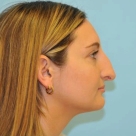
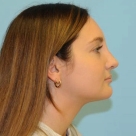
Dr. Berlet explains that the fracture had shifted Gonçalo’s bones and septum almost 90 degrees. He took the nose apart and rebuilt it, using spreader grafts, cartilage from the septum to reshape the tip, and a Porex shell, an internal splint he uses only rarely, to help hold the airway open. A few years later, Gonçalo returned for ear surgery (otoplasty) to reshape ears that stuck out.
Now 30, Gonçalo tells host Kerry Berlet that his nose looks so natural that nobody asks where he had it done, that he can breathe through it, and that he has more confidence than ever. He says it feels like another life.
Procedures discussed
Transcript
Kerry: Hello, welcome to Once Upon a Surgery. I’m the host Kerry Berlet, wife of world-renowned plastic surgeon Dr. Anthony Berlet. Today I am so excited to introduce our guest Gonçalo. He has quite a story. He looks so beautiful now. You would never believe what his before situation was, right? And you are from Portugal.
Gonçalo: Portugal.
Kerry: All right. And so tell me your story. So what happened? Was it your nose you weren’t happy with?
Gonçalo: So I’m from a little village and when I was a kid I broke my nose.
Kerry: Okay. How’d you break it?
Gonçalo: It was an accident. I was running away and I fell.
Kerry: Oh no. Was it with the kids? And then you just fell right on your face. Okay.
Gonçalo: But I was too young to notice my nose. And the time is going.
Kerry: How old were you at that time?
Gonçalo: At that time I think it was eight. Eight or seven. And as the time passed, as I was growing, my nose was crooked.
Kerry: And did your parents, was there anyone?
Gonçalo: They didn’t notice. But after some years they noticed, but I’m from a family very poor at that time. So that’s why I came to the United States, which I’m very grateful to be here.
Kerry: How old were you when you came here?
Gonçalo: 21 or 20, I think. And at that time I was here, I was getting some money. I was fixing my life and my parents’ life there.
Kerry: Oh, great. And what were you doing for work?
Gonçalo: I was working in a company in the warehouse. Someday I was looking in a mirror and I saw my face and I was like, “Oh my god, I need to fix that.” Because at that time I thought I’m never going to fix that because it’s going to be very expensive. But since I came here, I was thinking, “No, I need to fix it.” I’m not going to spend my life with this nose.
Kerry: It just bothers you, right? Especially knowing it was a result of an accident. But before you got the surgery, could you breathe?
Gonçalo: No.
Kerry: So you had broken it, it was crooked, and you were having difficulty with your breathing.
Gonçalo: A lot. And at that time, I was asking some friends for some information about the surgeons here. And I have a friend who is from my village, and she’s been here for years. And I asked her if she knows somebody. “Yeah, I know somebody” to do the best work. And she came with me to the appointments.
Kerry: That’s so nice. And you were just friends from back home?
Gonçalo: She’s from my village, the same village. And that was the time she came with me and I met Anthony there. At that time I didn’t know how to speak with Anthony, so that’s why she came with me and she helped.
Kerry: So she was the translator. So that’s a lot of trust, that you hope she’s translating everything correctly.
Gonçalo: Yes. It was a lot of information, you know. I remember the appointment, it was in August, and I did my surgery in January. I did because I know the winter time is the best time to do that kind of surgery.
Kerry: Oh, is it specific to the nose, or you just thought the winter for your schedule?
Gonçalo: I think it was the schedule too, and if you notice, the cold time is better for healing the surgeries, you know. Because I did my hair in Turkey and I did the same, in January, in Istanbul. And so I did the surgery in January and I was very enthusiastic and very happy.
Kerry: Had you known anyone who had their nose done at that point?
Gonçalo: No. I watched some videos on YouTube of how it works, and I was like, “Oh my god, it was crazy.”
Kerry: And you were under anesthesia, right?
Gonçalo: Yeah. I was nervous. But after some weeks, two weeks, after I removed everything, I was very happy. I remember the first time I saw my nose, I was like, “Oh my god.”
Kerry: Because it’s another nose, right? It’s so perfect. It’s amazing.
Gonçalo: It is very natural. That’s why I was afraid of looking for someone and getting some mistake, because it is your face, right? You need to do something natural. But after that I was very happy.
Kerry: What did your parents think?
Gonçalo: They liked it a lot. After two years, I did my ears.
Kerry: Oh, your ears too. Did they stick out a little bit?
Gonçalo: Yes, because they are big, and it was out like this. I was like, “Oh my gosh, I look like Dumbo. I need to fix this too.”
Kerry: And he can explain the surgery, but I think it’s actually a pretty complicated surgery, right?
Gonçalo: Actually it was easy, but the recovery was a little difficult because I was with stitches for two weeks. So for sleep it was hard. But after I removed them all, it was easy. It was fine.
Kerry: So you were 21 when you did the nose? And then how old for the ears?
Gonçalo: I think it was 25. I’m not sure. I think you did my nose in 2018, and I came here in 2017. The ears were like three years after that.
Kerry: Wow. And have you done anything else, or is it just the nose and the ears?
Gonçalo: Just the nose and the ears.
Kerry: I mean, you look great. Do you think your life is so different?
Gonçalo: It is different. When I meet someone, everybody looks at me in another way. And I’m so happy, so grateful to have met Anthony Berlet at that time, and to be here in this country, because it gave me a lot of opportunities here.
Kerry: Oh, that’s amazing. Obviously in everyday life with friends, but also at work. You’re a very handsome man. Do you think you’re received differently than when you had the different nose?
Gonçalo: It’s different. It’s like another life. Another person.
Kerry: And I’m sure you just have the confidence too, right?
Gonçalo: I have more confidence right now.
Kerry: And the breathing too. That’s probably transformational also, having had all those years with the difficult breathing.
Gonçalo: I had a very difficult time breathing all the time.
Kerry: Do you have any brothers or sisters?
Gonçalo: I have a brother. Sometimes he’s joking with me, but he never broke his nose. He’s proud because he knows I work a lot to get everything I have right now and everything I did. So he’s very proud.
Kerry: Have you ever done any acting or anything? I feel like you have that face now.
Gonçalo: No. It was one of my dreams, but I never did acting.
Kerry: It’s never too late. That face is such a cute face.
Gonçalo: Thank you so much.
Kerry: I want to talk to Dr. Berlet. So, Dr. Berlet, can we bring you on? So we now have Dr. Berlet. I’m very curious to hear, because I’ve seen the before and it really is such a transformation, and this is such a beautiful, perfect nose. He said that he also had trouble breathing before with the nose. And so what was that?
Dr. Berlet: It was a severe fracture, to the point where his bones were basically shifted almost 90 degrees. His septum basically slipped across 90 degrees and there was internal septal injury. There was the bone injury. The cartilage was all basically warped, and you could really see from the pictures, literally his nose just went like that. He had a pretty good bump as well, but it was really shifted almost 90 degrees, and that included the septum.
Kerry: And so when you saw that, did you have to do anything different than you would normally do?
Dr. Berlet: Well, yeah, it was definitely more involved. It’s very hard to make a crooked nose straight. That’s just sort of a given. But in this particular case, I had to deconstruct the entire nose, and then you had to break it and rebuild the cartilage on the inside, spreader grafts through this area. And in his particular case, it’s something I don’t do too often, but there’s something called a Porex shell, and the beauty of that is it’s like putting an internal splint inside the nose. And the tissue actually integrates into it, so it becomes part of it, and it will also hold something called the internal valves open. So it’ll open your airway. The septum was so severely, it wasn’t even deviated, just literally a right angle. Deviation typically suggests a warp. But this was literally broken. So it was a fracture and it healed at a right angle.
Kerry: Oh my gosh. So what was it like when you got a cold, if your nose was like that? I’m sure there was no breathing through his nose at the time.
Dr. Berlet: You just never breathed through your nose. Since it happened when he was young, eight years old, he lived with it for over 10 years. And again, very sweet, his friend Angela was a former patient of mine, a major reconstruction too, for bone cancer. She brought him in. It was very sweet.
Kerry: That’s so nice. And he was saying he didn’t speak English at the time.
Dr. Berlet: And so she’s doing great, isn’t she?
Gonçalo: Yes. Thank you. Thank you so much. Really amazing.
Dr. Berlet: Yeah. Totally no issue.
Kerry: And I just wonder, because I was saying he has a brother, I would just be curious to see what your nose would have looked like if it weren’t broken, because this is such a beautiful nose.
Dr. Berlet: Well, you know, the Portuguese people are beautiful people.
Kerry: They are beautiful people. I’m sure your brother’s very handsome. You guys need to go there.
Gonçalo: I went there last year with my mother. Very beautiful.
Dr. Berlet: Lisbon?
Gonçalo: Lisbon. Yes.
Dr. Berlet: That’s right. [inaudible] And his friend Angela, of course, she’s very beautiful too, right?
Kerry: And then he said that was the first thing, and the second thing was his ears.
Dr. Berlet: Yeah. I mean, that came out of nowhere. He came back to me after three years.
Gonçalo: After I did my nose.
Kerry: Right. But I thought you said that the ear surgery was actually a little bit more complicated than you would think, right?
Dr. Berlet: More complicated than anybody thinks. It’s not like you just cut a wedge.
Kerry: You think you could just cut a wedge and push it back.
Dr. Berlet: You have to reshape it. There’s something called an antihelical fold. You need to reshape it, and you do that by scoring it on one side and then putting stitches to hold it in the position that it’s supposed to be in. So you’re shaping it that way. You’re taking some of the deep bowl out and bringing that in.
Kerry: And that doesn’t change your hearing, right?
Dr. Berlet: No. But the external ear is also part of your hearing. It’s collecting the sound waves. So I don’t know, maybe you don’t hear as well, because that was a good, like a Dumbo. It scoops it all in.
Kerry: You can’t hear from the side, but you can really hear from the front. But then, weren’t you in this office recently? What was that?
Dr. Berlet: Oh, he just had a little lesion on his lip and I just took care of that.
Kerry: Because I knew you reconnected. And then that was when you took, because I think the before and afters that we have are many years apart, right?
Dr. Berlet: Well, yes. How old are you now?
Gonçalo: Now I’m 30.
Dr. Berlet: You’re 30. So nine years. It’s nice.
Gonçalo: Because the first one I think was in 2018, and the ears were like after 2 years. Two or three years.
Dr. Berlet: Well, it’s nice.
Gonçalo: It was amazing.
Kerry: I hope that you inspire other people. Have you seen other people?
Gonçalo: I have a friend, she did the nose too. I think you remember Deborah? She was Brazilian, and she asked me where you did your nose. I said, the clinic in [inaudible]. I can go with you.
Kerry: So you’re paying it back?
Gonçalo: Yes. And she did the nose with you, and she’s very happy with her nose.
Dr. Berlet: That’s always good to hear. You never know. No news is usually good news, but sometimes they’re planning your death.
Gonçalo: Anyone who asks me about doing some surgery, ears, nose, I always recommend.
Kerry: People who meet you now probably don’t know you had your nose done, right?
Gonçalo: It’s very natural. Everybody tells me, “Oh my god, it’s so beautiful, your nose.” But nobody ever asked me where I did that nose. It looks very natural.
Kerry: That’s amazing.
Dr. Berlet: That Porex shell, I use it probably once out of 500 noses. So, you know, I’ve done a lot of noses over the years.
Kerry: And then what is it? What’s inside every single time?
Dr. Berlet: It’s actually hard to describe it.
Kerry: Have you ever thought about that? What’s inside your nose?
Gonçalo: At this point, I saw some videos before I did the surgery. And that was all like, oh my god.
Kerry: So what kind of material is the Porex?
Dr. Berlet: Well, as it suggests, it’s porous. It’s like a porous plastic that integrates with the tissue. So literally the vasculature and the stuff all integrate into it, and it becomes part of it. And it has a beautiful shape to it. If you could ideally do that for every nose, it would be great.
Kerry: And so why can’t you?
Dr. Berlet: Well, everything has its pluses and minuses. It’s an artificial thing, a foreign body, so it could potentially get infected someday. Unlikely, but he’s been 10 years. It doesn’t look like it’s going to happen, right? So it’s going to be great. It was a good option for him. It really worked well. I actually have a case coming up where I’m going to be using it again. It’s been years since I’ve used it.
Kerry: So do you just have that in your office just in case, or do you order it?
Dr. Berlet: Reorder it. There are different sizes, for the right person.
Kerry: Oh, so you fit it to the face?
Dr. Berlet: Yeah. You fit it, sort of measure it, decide what you want. Small, medium, large, extra large. Not too often with that one.
Kerry: And then at the time, did you have the technology that you have now, where you could show him what the nose was going to look like before you did it? Do you remember that? In 2018? He has that now in his office. If you come in and you don’t like your nose, he can show you on the computer.
Dr. Berlet: I’m pretty sure I did that.
Gonçalo: Yes. I saw that.
Dr. Berlet: So, here’s what it could potentially look like. I think it might even be better than we showed you, right?
Gonçalo: For sure.
Dr. Berlet: And then you rebuild the tip, the whole thing too. You do that with the cartilage from the septum. It’s very cool. The nose is two parts. It’s a bridge and a tip, and you’ve got to take care of the bridge. His bridge was craziness, with the sides, all that stuff. And then his tip was consequently warped and thrown off a little bit too. So then you have to rebuild and shape that, and usually I do that with some additional cartilage like this.
Kerry: I just can’t imagine you lived so many years not able to breathe out of your nose.
Gonçalo: I think I got used to living like that.
Dr. Berlet: You just never recompensate. I think long term it’s just not good for your health to not be able to sleep well.
Kerry: And they say there are filters with the nose, right? So many levels.
Dr. Berlet: Well, yeah. You’re breathing through your nose. There are so many functions of the nose that we don’t even really understand, like humidifying the air. It’s your first stance for the immune response and all those different things that come in. And certainly with sleep, if you’re not getting sleep, a lot of people will tell you you’re not going to live very long.
Kerry: And do you exercise at all? Did you before that?
Gonçalo: Actually, no.
Kerry: You don’t do any exercise?
Gonçalo: No. I’m doing it right now.
Kerry: But when you had that, did you feel like you couldn’t, or it might have been limiting you?
Gonçalo: Sometimes, yes. Working in some places more closed, you know. It was hard, but it is what it is. Now I’m great.
Kerry: And what was it like when you woke up? Were you like, “Oh my god, I can breathe out of my nose”? Could you smell?
Gonçalo: Yes.
Kerry: So you weren’t really using it, but you could. Did you feel like this?
Gonçalo: It became more fresh. It was like the first time. It was different.
Dr. Berlet: It was like, “Oh my god,” like a wind tunnel. [inaudible] In the winter time, and then you can feel the cold. You wake up with a dry mouth, you end up breathing through your mouth, and that’s just rough.
Kerry: That’s amazing. Well, I’m going to go get the champagne so we can do cheers to the new nose. All right, so I just want to say cheers. Congratulations on having the courage to transform your life, and cheers to Dr. Berlet. Tremendous work. Seeing it in person, it looks completely natural and beautiful.
Dr. Berlet: Where it started is probably more important than where it is, because it was bad.
Kerry: It breaks my heart to think of all those years just not able to breathe and everything else.
Gonçalo: Thank you so much. I’m so grateful. Cheers.
Kerry: That’s really delicious champagne. All right. So thank you for watching this episode of Once Upon a Surgery. I hope this was informative, educational, inspirational. Don’t forget to like and subscribe and please comment, and we’ll see you next time on Once Upon a Surgery.
Ready to start your own story?
Meet with Dr. Anthony Berlet to talk through your goals and options.
Request a Consultation (332) 232-5630