

She Took Her Power Back: Gina’s Breast Reduction After Surviving Abuse
Summary
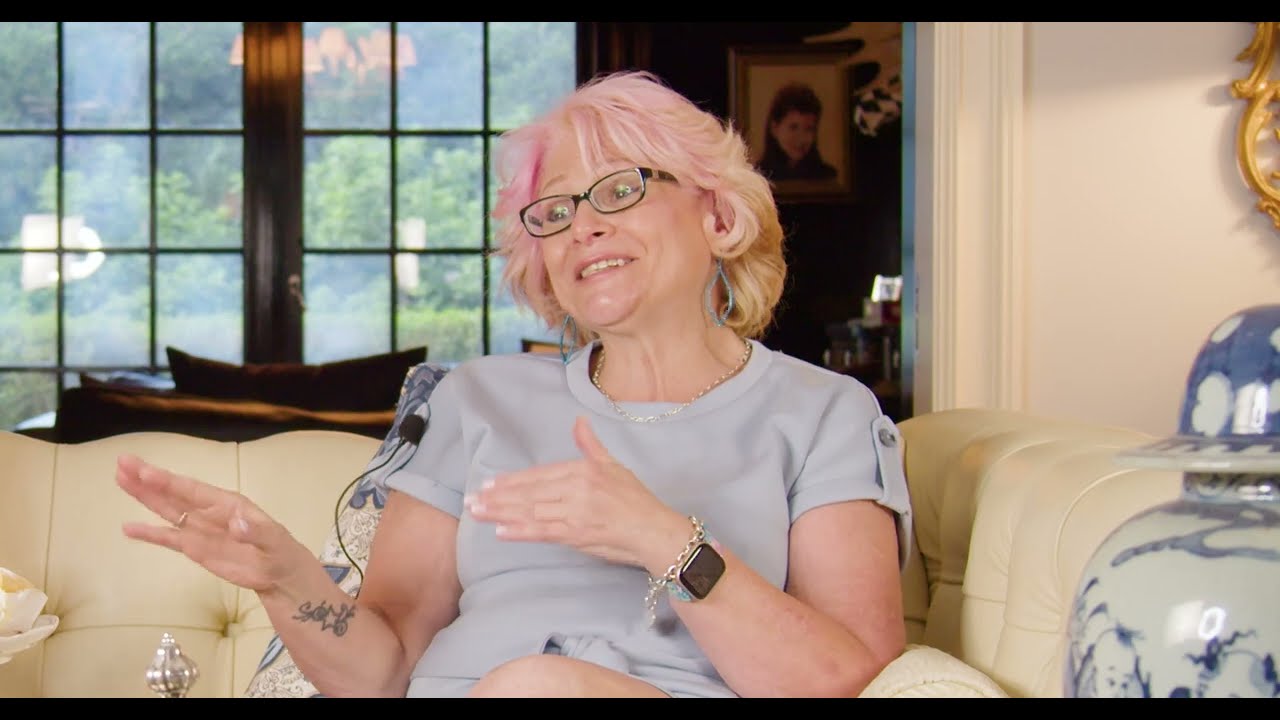
Gina, 62, knew from a young age that she wanted a breast reduction. A survivor of childhood sexual abuse and stalking, she spent years unhappy with a body that didn’t feel like her own, and weight gain she links to a medication injection made her breasts heavier still.
After a three-year court case against her abuser ended in a settlement, Gina used the money to reinvest in herself with a breast reduction and lift. Five friends had recommended Dr. Anthony Berlet, and she left the details up to him. She tells host Kerry Berlet she was up the next day, needed about one pain pill, and healed well.
Since surgery, Gina says she feels lighter, can carry groceries and cases of water, no longer gets a rash under her breasts, and is shopping in smaller sizes. She also describes less anxiety and hair-pulling (trichotillomania) and a fresh start after ending a difficult relationship.
Dr. Berlet joins to explain her surgery. He describes why he uses a superomedial pedicle technique rather than the older inferior pedicle, how it shapes a rounder, more projected breast without bottoming out, how scars are kept short, and why he does not use drains for breast reductions.
Procedures discussed
Transcript
Kerry: Hello, welcome to Once Upon a Surgery, the show where we have raw, unfiltered, and sometimes unbelievable journeys through plastic surgery. I’m the host Kerry Berlet, wife of world-renowned plastic surgeon, Dr. Anthony Berlet. Today, I have my guest Gina, who I’m really interested in speaking with. Gina was so sweet and brought me a new teacup that actually perfectly matches my outfit today. So, cheers.
Gina: Cheers.
Kerry: All right. So, now take me back. I know you have quite a story. So, you know, tell me about what first made you, you know, what were… I know that you had a breast reduction.
Gina: Yes.
Kerry: And so, at what point in your life did you become unhappy with your breasts? Were you always unhappy or was it like with age or what happened?
Gina: Okay. Well, you know, I had a lot of trauma growing up. I was sexually abused and stalked by the same individual, and…
Kerry: Oh, no.
Gina: You know, I was not happy with certain things of my body and I knew from a young age because I would tell my mother, I want plastic surgery. And of course, she’s like, plastic surgery? But then, you know, now I’m here. Here I am 62 and I made the decision, which I always knew that I wanted a breast reduction and lift.
Kerry: Okay. And so do you think that trauma, like, did it make you just like unhappy with your body? Like where did the plastic surgery, like were you wanting to kind of remove the trauma?
Gina: Yes.
Kerry: Okay. Yes. All right.
Gina: And plus to make myself feel better, not to make anybody else feel better but me.
Kerry: Okay. And so growing up, like, so you were a very busty person. Is that how it was?
Gina: Yes.
Kerry: All right. And but so was it at one point like did they look nice and then with age, or was it just that they just immediately were…
Gina: Well, I found that, you know, my weight would go up and down. It came from medication, not food.
Kerry: Okay.
Gina: And then I took that Depo-Provera shot, which packed on so much weight. And then, you know, my body changed and I had to wait, basically, I had weight loss surgery too, because the doctor said we want to reset your metabolism. And I did go to the head of St. Barnabas and he said your metabolism shut down from that injection.
Kerry: Really?
Gina: When will it come back? I can’t give you an answer.
Kerry: But I mean, you look like you’ve lost weight then. I was like, you don’t look…
Gina: I weigh 145 now, but after that Depo shot, within two weeks, and my mother witnessed it, I was 250.
Kerry: Wow. So that was like, and no matter how… you went 250. Okay.
Gina: But then trying to lose that weight. I’m going to say I was in my late 40s or so. I could never, like, no matter what I did, I could not lose the weight. Since I had all the surgery, you know, the weight loss, my breast, my body seems to be going back to where it should be.
Kerry: Okay. Very interesting. Yeah, that’s unusual.
Gina: Yes.
Kerry: And so do you think, so maybe it was, so you gained the weight and then that impacted, and I know like with me, like when weight fluctuates, again, like it’s sometimes often that that’s where it changes too. But so then maybe you gained the weight, and then do you think that made them like more…
Gina: Yeah. Because it’s like the weight up, and they could see 15 pounds gained, you know, trying to lose that weight, then she would gain 20 within like a week, and this went on and on and on. So they knew it was not from food. It was due to that Depo-Provera shot.
Kerry: Wow.
Gina: And I took that Depo shot not for birth control, but I had severe PMS.
Kerry: Yeah.
Gina: It worked like a charm, but then after five years I came off of it and that’s when, all I had, I was losing my eyesight. I had to have a spinal tap, and to this day my optic nerves are swollen because of that injection.
Kerry: Wow.
Gina: But so I am on medication to keep the weight down, you know, because the thinner I am, the pressure…
Kerry: So it’s… yeah. It helps with your vision. Okay. Yeah. All right. And so when did you feel like, because you were unhappy with your chest size. Could you wear clothes, like how did you feel in clothes?
Gina: You know, back then it was what it was, because I knew that wasn’t the real me, being that heavy, you know. So I do eat healthier, like, so to speak, like for lunch I might have watermelon.
Kerry: Okay.
Gina: I like beets. I like Chobani yogurt.
Kerry: Those all sound very healthy.
Gina: Yeah. So, I’m not like your typical, you know, big meal type of person.
Kerry: Mhm. Yeah. Okay. But then, and so in terms of like with your wardrobe, because I know we chatted a little earlier, but so like, did you feel like when you were unhappy with your body, like, you know, would you wear larger clothes to try to hide them?
Gina: Well, no. I actually fit into the larger clothes, right? And then since my breast reduction and lift, I lost maybe 40 lbs.
Kerry: Wow.
Gina: Yeah. So, I eat all carbs, because protein, like I said, and I watched this documentary about that people think carbs are bad and they’re not. If you look at the Italians in Italy, they’re not heavy.
Kerry: Right.
Gina: So, it’s, but everything in moderation.
Kerry: Exactly. It’s like they probably don’t have like the Olive Garden size portions there, you know. I was like, maybe they’re a little…
Gina: But you know what I will do if I go out to eat? I’ll order an appetizer or a half an order.
Kerry: Okay. Right.
Gina: And I always eat on a smaller dish, even at home.
Kerry: I see. So, and then I know you have a story about, like, what prompted you getting the surgery.
Gina: Okay.
Kerry: So, do you want to talk about that? You talked about, you know, and again, you were a victim of abuse, right? And so, and that was, something happened recently about that, right? And he…
Gina: Yes. Like with my ex-boyfriend, I just felt after eight years that I could never be thin enough or worthy of him. And that’s what prompted more of the weight loss. But today as I sit here, I’m getting happier about myself.
Kerry: That’s great. And I can’t, you know, this… yeah, you look amazing. I mean, I would like, again, like they look great. And it’s just, isn’t it funny how a lot of people with small chests, right, like want larger chests? It’s like, and then, you know, I’m sure it’s like for you, I’m sure you feel lighter and you feel better in clothing.
Gina: Yeah. One thing about me, I did not want a big chest.
Kerry: Right.
Gina: No, I like the bodybuilder, like that kind. But I’m extremely happy. I fit into a small petite, and now all the mediums are big on me. It’s like I have to get rid of them.
Kerry: So, you’ve got to go shopping.
Gina: You know how many times I had to get rid of clothes? It’s like…
Kerry: Right.
Gina: But I think this is it. I could fit into a medium, some small pants I can.
Kerry: Okay.
Gina: And I feel really good about that.
Kerry: All right. So talk to me, because I know, so tell me, I mean, this is just really horrifying, right? But so you were, you know, you were abused as a child, and then you said something happened so recently.
Gina: I went to court with the pedophile.
Kerry: So you took him to court.
Gina: Yes, I did.
Kerry: Okay.
Gina: It took three years for the whole thing. Of course I could have gotten more money, but you know, I just wanted it to end. It was very taxing, especially sitting next to him.
Kerry: I’m sure that’s horrible.
Gina: Very horrible.
Kerry: But so that’s good. So you basically sued him over the abuse for the damages.
Gina: Yes. And I’m glad I did, because I want to leave my mark and help other women who are silent and who don’t have anybody. Maybe their mother doesn’t believe them. My mother did believe me.
Kerry: Well, that’s good at least.
Gina: Yes.
Kerry: But that’s horrible. And then so then you mentioned…
Gina: I knew once I got that money, it wasn’t anything to think about. I want a breast reduction and a lift, and that’s what I… there was no doubt in my mind this is what I was going to do. And I have thought about a tummy tuck, but you know, hearing, like, I know it’s very painful, but you know what, I know I can handle it if I can clean the next day after coming out of that type of surgery.
Kerry: Right. Right.
Gina: And I was on no pain pills. Maybe one. That was it.
Kerry: That’s amazing. Yeah. And I think that’s like a painful… isn’t it? Or, you know, all these people are telling me surgery doesn’t hurt. It’s crazy.
Gina: I’m not going to say it tickled, but it is something. If you really want something, no matter what it is, you’re going to do it whether it hurts or not.
Kerry: Okay. Right. And I like that it was kind of a full circle, where somehow after the abuse you were given something that then you were able to take to basically kind of, you know, relieve yourself of a part of the trauma.
Gina: Yeah.
Kerry: You reclaimed your body, right, with the damages from the settlement.
Gina: A lot of people don’t understand. It’s easy for people to judge: well, you should move forward. You know, when people say that, they don’t… it depends on the person. It depends on the trauma. It depends how long. And, you know, I still get frightened, because he also stalked me. So if somebody…
Kerry: That’s terrifying.
Gina: …comes behind me and taps on me, I get, you know…
Kerry: That’s the trauma, still the triggers.
Gina: Yeah. Yeah.
Kerry: Oh, that’s terrible.
Gina: But you know, and when people say, well, you know, why do that? Well, why do you go to the gym? Why do you put makeup on?
Kerry: Right. When people judge about why you got the surgery, right? And it’s all about feeling good, you know, just on the outside. Also, sometimes it can help the confidence, right?
Gina: Right. And don’t get your nails done. Don’t put makeup on.
Kerry: Don’t put makeup on. Wear sweatpants and let your hair go gray, right?
Gina: If you’re going to speak the truth, let’s speak the truth, right?
Kerry: Yeah. People can be judgy, but it’s like, it’s really not for them, right? This is your journey.
Gina: Yes. And I don’t regret it one bit.
Kerry: Right. That’s great.
Gina: Every time I look, it’s like…
Kerry: You look like you’re so happy. I know. And you even were messaging about how happy you are. I love it.
Gina: I am. And Anthony Berlet is like, really, I can’t say enough things. Patient, and you know, he knows his stuff, right?
Kerry: Yeah, definitely. Okay. So, tell me, how did you, you did doctor research, that you did?
Gina: Yes. I researched one. And then I got a lot of referrals, actually. Where I go get my hair done, he also did the girl there that I’m friends with. Dr. Berlet.
Kerry: Yes. Really interesting.
Gina: She’s the one, too, among five other friends that gave me his name.
Kerry: That’s it. So it’s like somehow you’re… like different people: oh, you have to see Dr. Berlet, right?
Gina: Yes.
Kerry: And so, okay, interesting. And so, like, how many in person, you went to one, and did you have an appointment and everything, or…
Gina: Well, no, I did it like on the phone, online.
Kerry: Okay.
Gina: You know, and then I started asking, and these people are like…
Kerry: Right, that they basically, it’s word of mouth, and like you get like five referrals, you’re like, all right, this guy has got to be good.
Gina: Yes. And there is not one thing that I could say. I love the hospital, the nurses, I mean everything.
Kerry: Awesome. And so right away, so you walked in and you, like, you know, you explained what you wanted to do and, you know, he was like right on board.
Gina: Yeah.
Kerry: Okay. All right. That’s great. And were you nervous going in for the surgery?
Gina: Maybe a tiny bit, but my girlfriend dropped me off and I was fine. I mean, and people have called me that I referred, so they could talk to… and you know, it’s funny, because they’re asking me, like, does it hurt, blah blah blah, and this, that, and the other thing. And it seems to me, well, then you really don’t want the surgery. If you have to ask that many questions, then you’re really not sure. I knew: whatever, I’m getting this done.
Kerry: Right. Right. Right. And so what was that like when you first woke up from the surgery?
Gina: The next day I got up and I started cleaning, and the nurse called me. I think you’re not supposed to be… right. She goes, cleaning, washing clothes? You do realize this is major surgery. I says, well, you told me that we want to prevent blood clots. She says, “I didn’t mean to clean your entire house.” But, well, now I’m healing faster.
Kerry: Right. Right. And so then, so what’s it like? So when you leave, so you have bandages on?
Gina: Okay.
Kerry: And so how long do you have the bandages on before you can actually see the results?
Gina: Well, I did… yeah, I’m trying to think. You know, I don’t even remember, but I did see, like, you could see the outline of the…
Kerry: Well, that… yes. Yes. And so, what was it like? Do you remember the moment when you took the bandage off and saw the new breasts for the first time?
Gina: It was like night and day.
Kerry: Oh, yes. And so, were they still bruised at that point though?
Gina: Yes. But, you know, I listened to what they said. You put cream and everything, and I healed perfectly.
Kerry: Wow, that’s amazing. Yeah. And so did you, and so when you say you were super… you were happy, and…
Gina: Yes.
Kerry: And I mean, it’s like it’s a shame that they’re in clothing, because you can’t really show them, right? Unless we go to Sandy Hook next. Right. Right. Right. I mean, are you at a point where like now you actually… and like how you felt before, were you ashamed to be naked, or, you know…
Gina: Yes. I really would, I did not want to look in the mirror, but now it’s like, oh my god. Like, I said this to my daughter. I just want my breasts done so I could wear a blazer with nothing under.
Kerry: Right.
Gina: Like Kim Kardashian.
Kerry: Right. Oh, okay. So, you like that look?
Gina: I do. Yeah.
Kerry: So, you can show them off, right?
Gina: Yeah. Like I’m just like… it’s something you cannot describe, right?
Kerry: Yeah. I’m sure. And so, it’s almost a shame when you have to put your clothes on now, right? But I mean, this dress looks amazing. Like, it looks very, very flattering.
Gina: Thank you. But, you know, it’s not… you still have, like, you know… but most people would be, you know, well, even in my bra, like, you know, when you’re supposed to lift, there’s nothing to lift, right?
Kerry: Oh, you’re just perky. You don’t even need a bra, right?
Gina: I could go without a bra, believe it or not. Yeah. And I’m 62.
Kerry: Wow. You look amazing.
Gina: Thank you.
Kerry: Wow. And now you’re 62 and you don’t need a bra, right? That’s pretty incredible. And did you also, did you ever have back pain as a result of, you know, your…
Gina: Yes. And also when I was pregnant with my, not my first, but my second, I had back pain for like years.
Kerry: Really?
Gina: Yeah.
Kerry: Okay. And so have you noticed a difference, like an improvement, in terms of how you feel with your back now since the surgery?
Gina: You know, like, I am divorced. I live with my younger daughter and my cat and my mom. It’s my mom’s house. She lives upstairs. I could carry cases of water in.
Kerry: So you could never do that before?
Gina: No.
Kerry: Really?
Gina: No.
Kerry: Wow. Because you were just…
Gina: It was too much. Yeah, it was too much. But no, I’m going to shape up my arms, because, you know, from losing weight and stuff. But yeah, I’ll carry three bags in at once. Well, two. Who wants to go back to the car for a second?
Kerry: Right. Right.
Gina: I’ll drag it across.
Kerry: But that’s interesting. That’s a whole new thing, because you didn’t… like before, you were just limited in terms of…
Gina: Yes. I could not believe how bad they really were, and it was between that or a tummy tuck in December, but he said, “Let’s do the breast.” And he says, “Your stomach is really not that bad.” Well, I used to bodybuild.
Kerry: Wow. Really?
Gina: Yeah. I find it’s a good… it’s hard work, but it’s good for the mind.
Kerry: Well, now, I mean, these days they’re really encouraging, like how healthy it is to lift weights and everything. It’s actually better to do that, right? Everyone’s about muscle now.
Gina: Yes.
Kerry: Than to do cardio, right?
Gina: Yeah. I used to do cardio an hour, seven days, and I did not lose one pound.
Kerry: Right. I think your body kind of adjusts to it, right? Yeah. Interesting. And so, do you lift weights now again?
Gina: No, but I will eventually get back to that. But I enjoy the sport and I enjoy seeing the body changes within.
Kerry: Right. Okay. Interesting. Now, people like your family, so your family knew you were doing it, and obviously I think you’re very open about it, but have you had people just notice the difference?
Gina: Like, I mean, I have a big mouth, so I blabbed it to everybody, but my mother was very supportive. She never said once, like, oh, what are you doing that for? No, she was very supportive, and she realized how…
Kerry: I mean, they were bad, right?
Gina: I mean, beyond.
Kerry: Okay. Yeah. Yeah. And does your mother also, again, knowing the trauma, like she understood, you know, part of that too, right? That that was a liberating, you know, part of the surgery.
Gina: Oh, yes.
Kerry: Wow. And so, like, have you had to buy all new clothes?
Gina: Well, yeah. Like, all my tops, like Free People, like all those nice clothing, all the good brands.
Kerry: Oh, what a shame.
Gina: I know. But it is nice to shop.
Kerry: Yes, it is.
Gina: But I always have a, you know… it’s because I’m a girl.
Kerry: And is it, right, is it too much? You can’t just alter them, right?
Gina: No. No. Yeah. Because you know why, I noticed, like, when I do wear sleeveless, it falls. And I hate that feeling.
Kerry: Yeah. Yeah. Pulling it up, right? And it really is, like, so I mean, you feel like, and I know, right? Because when you have the large breasts, like clothing often isn’t flattering, unless you kind of inspect, or even a bathing suit for that matter. Oh, right. I mean, could you wear a bathing suit?
Gina: I could, but you know, the size just wasn’t right. It was either too tight up here and… it was just all off. And like Tony just said that they were uneven. I didn’t even know that.
Kerry: Right. Wow. So, I know, because I was going to say, because he said they were uneven, but they were probably too big. You didn’t even know. Like you couldn’t see the end of… but, oh no. Oh, that’s okay. So it must… and you also mentioned the change in weight before and after. Did you weigh yourself? Just because, you know, I don’t know if there was also weight loss, but do you know how much weight you lost just actually from the breast reduction?
Gina: Not… well, overall I can tell you, at that time, well, now I’m 145, so I did lose a significant amount.
Kerry: Okay.
Gina: From December to today.
Kerry: Okay. So this was done in December. So this is about six months ago.
Gina: Yeah. Okay. Wow. And even with my gastric sleeve, like some people will gain weight. No, I kept losing and losing, and even to this day.
Kerry: Wow. Okay. But I was just wondering, even just about the physical, the actual weight of the amount of breast tissue. Like, it probably was a lot.
Gina: Right. Right.
Kerry: But I mean, and then it just also makes you feel lighter, right?
Gina: And I do. I actually feel lighter.
Kerry: That’s great.
Gina: And I would always get that rash under here, too.
Kerry: Oh, really? And you don’t have that anymore?
Gina: No.
Kerry: Okay. And that was just from, like, probably the rubbing, and…
Gina: Yes.
Kerry: Okay. Wow. And then, so, is that genetic? Like, so you said you have a mother and a daughter. Like, is that something, or was it just something like maybe related to being heavier, or…
Gina: Well, it was related to that Depo shot. That’s why they got so bad.
Kerry: Oh, right. But the Depo, probably it was a result of weight gain, right?
Gina: So, yes. Yeah, it was hard.
Kerry: Yeah. I mean, it doesn’t just make your breasts grow. I don’t know.
Gina: I don’t know. This shot and then…
Kerry: Yeah. Okay. All right. Very interesting. All right. So, so tell me about what your bras looked like before and then what they look like now. Do you buy, like, sexy bras now?
Gina: Yes, I do. Yes, I do.
Kerry: And, like, did you before?
Gina: I tried to, but I just, you know what it was? They were too heavy, and I couldn’t take the bra… like…
Kerry: Yeah. It was more like almost like a harness.
Gina: Yeah. Exactly. That’s it. That’s a perfect word for it.
Kerry: Yes. I mean, once they’re large, it’s just naturally hard to find one that makes you feel nice, when it’s just…
Gina: And then, when I was in the bigger size, by the end of the day, they’d be falling out of the… I’d have to take my bra off.
Kerry: Mhm. Right. Right. And so now, I mean, again, so it feels lighter, and then you can wear, like, sexier, you know, underwear. And what about… and so this is your first summer with the new breasts?
Gina: Yes.
Kerry: And so have you been to the beach yet?
Gina: No, not yet.
Kerry: Okay. Well, I mean, it’s been a hundred… it’s about you. You should go.
Gina: I know. I should run there.
Kerry: Right. Amazing. And so, have you bought new swimsuits?
Gina: I did.
Kerry: Okay. But you haven’t shown them off yet?
Gina: Well, no, not yet. But I am into a size 10.
Kerry: Okay. Wow. And what was it?
Gina: A 14.
Kerry: So, that’s four sizes, right? Okay. Amazing. And so, is it a bikini or a one piece?
Gina: It’s a one piece, but to tell you the truth, I probably could get a two-piece, like a high bathing suit pant. And I probably could, right?
Kerry: I know you said you’re still not thrilled with your stomach. So, I mean, but still a one piece… I mean, and there are plenty of sexy one pieces, right?
Gina: Oh, yeah, there are. Yes.
Kerry: Yeah. Some people, I think Tony might even actually sometimes think they’re sexier than the two pieces. So, you know, so that’s great.
Gina: Yes.
Kerry: And you mentioned, like, wanting to go… do you think you would ever go to a nude beach? If you’re that proud… no, I’m just kidding.
Gina: You know, I never say never to anything.
Kerry: Right. I’m not encouraging it. I was just curious if you’re that proud.
Gina: She never knows.
Kerry: Right. Right. Right. Yes. And you mentioned that you, did you actually send pictures to your daughter, or did you just show them off?
Gina: I just lift up my shirt no matter where I go.
Kerry: Keep going. I’m here for it. Right. And with the five referrals, have they seen you since they had sent you?
Gina: Yeah.
Kerry: And so the five people that referred you, did they all specifically, or they had other things, but they specifically recommended him?
Gina: Yeah. They had breast surgery with Anthony, and she told me about him right from the beginning.
Kerry: Oh, really? Okay. Okay. Very interesting. All right. Let me just… and so, in terms of, I know you have, you know, a situation which we talked about with the boyfriend.
Gina: Yes.
Kerry: And so do you think maybe now, like, it’s a fresh start, and you know…
Gina: I do think it’s a fresh start. You know, I just have to say, we don’t… you know, I wear my heart on my sleeve.
Kerry: And I can tell that about you.
Gina: Yeah. I’ve always been like that. I’m an easygoing person. What I love, I love with everything. And I had to end things. And yeah, do I regret it sometimes? Yes. But, and no, because I don’t have that anxiety feeling. I always had that, like, he was doing something wrong. Things just didn’t sit right with me.
Kerry: Okay.
Gina: And so I’ve been single for like a year and a half.
Kerry: Okay.
Gina: And you know, I could say this about me, that I don’t want to get married again. I’ve been married twice. And actually my ex-husband, my older daughter’s father, wanted to go back with me, because he got divorced and wanted me to move to Florida. But no, I need to get to know me.
Kerry: Of course.
Gina: And I am worthy of somebody else’s… that, you know, what I put out there, I get back.
Kerry: Absolutely. Yeah. And then, so just to revisit a little bit, like, the trauma. Do you think, so having this surgery, how do you, like, do you think you have less… like, I don’t know what you were experiencing related to that trauma, but do you think, like, whatever those signs were have improved since you had this surgery? Do you have less…
Gina: Yes. I do feel that way. Yes. Because there were times I would be inconsolable and just sobbing. I mean, it was like every other day.
Kerry: But so were there, like, so maybe there were things that just triggered you related to that trauma that happened as a child, right? Okay. And so, do you feel like, since you were able to, like, take this, you know, move, and take control of your body and make the change you wanted, that you have less of that?
Gina: Yes.
Kerry: But so it sounds like, I mean, the surgery is almost like symbolic in a way, of like kind of freeing you of some of that childhood trauma, because you were like kind of maybe cutting that away. Okay. So that’s, I mean, that’s actually really beautiful. Right.
Gina: Yes. And I used to, you know, I’ve had my eyebrows microbladed like 10 times, because…
Kerry: Wow. Okay.
Gina: I pick. Because, again, it’s with the… but when I was with my ex, it was just an everyday occurrence. Now I hardly even do it.
Kerry: Oh, that’s good. So, like, the trichotillomania, is that…?
Gina: Yes.
Kerry: Okay. You had some of that.
Gina: Yes. It was bad. Like, I was in the hospital with a staph infection from it.
Kerry: Oh, wow.
Gina: And did it stop me? No. But now I don’t have that anxiety.
Kerry: Right. Because a lot of that is probably, like, it’s triggered, and then that was kind of like basically a symptom of, you know, what you were experiencing with the trauma, and so that was a way for you, kind of… okay.
Gina: So I have grown, because he used to take… and he did a lot of nice things for me, but I drive at night now, where I wasn’t doing that.
Kerry: Really. Because you were just, you know, still, there was something related to that that triggered you. Okay.
Gina: So, you know, I do my babysitting. I do hospice. And, you know, I will cut people’s hair for nothing, the elderly, to give back.
Kerry: That’s so, I mean, amazing of you. And like doing, I mean, again, that’s, you know, exhausting. I mean, it’s really emotionally difficult.
Gina: Like, I find that I can make them laugh, and I give them that. That’s what they…
Kerry: I mean, at the, you know… and then when you’re at that point, to have someone, you know, make you smile and have some little moment of joy.
Gina: Yes.
Kerry: That is so powerful.
Gina: Yes. And it’s not upsetting to me, because I get to be with them and make them laugh, and, you know, let them talk about the past.
Kerry: And, you know, it’s really nice that you can do that for somebody. Wow. It seems like you have such a good heart, and I feel like, I hope this gives you, like, basically, you know, this new life, right? And so hopefully, you know, this will clear a path for you to just find happiness, and even if you don’t want to get married, just generally…
Gina: Yes.
Kerry: Self-love, right?
Gina: I have lived with my two ex-husbands, I’ve lived with two ex-boyfriends, but I’m at the point in my life now, it could change, that I don’t want to get married and I don’t want to live with anybody. I’m okay. You know, I’m never bored, and I don’t need to be with somebody.
Kerry: No, it seems like you have a lot, like you have love in all these other places. It’s not like you necessarily need that, right?
Gina: Yeah. No. And I have my daughters, I have my mom, my cat. And when I go to work and babysit, I enjoy getting them McDonald’s. I spoil them.
Kerry: Mhm.
Gina: And that’s just me. Like, you know, I enjoy it.
Kerry: Okay. So I want to now get into the details of the surgery, because I want to understand. I know each one is different. So I want to hear, I mean, because you don’t know everything, right?
Gina: Oh, no. I’m dying to hear what he did, because I was out like a light.
Kerry: Okay. But maybe next time you could assist.
Gina: Okay. The patient.
Kerry: I don’t know. I was like, I don’t like all the blood. I don’t think that’s… but all right. So let’s bring in Dr. Berlet, because I want to hear what he has to say about it. Okay. So, Dr. Berlet, welcome.
Dr. Berlet: Thank you.
Kerry: So, Gina was also, we’re very curious to hear, well, first I guess we want to hear about the surgery, but first tell me about, you know, her before. You know, what it looked like, and, you know, how you assessed what needed, you know, to happen.
Gina: Emergency. Emergency.
Dr. Berlet: Well, she had elongated breasts that had fallen quite low.
Kerry: Okay.
Dr. Berlet: Makes you look very…
Kerry: Hangy.
Dr. Berlet: Well, maternal. It does fill you up. It makes you look heavier than you are. So, it’s unusual… unfortunate.
Kerry: I mean, so the breasts are long. They’re hanging. They’re large. I know.
Dr. Berlet: And so, they basically were uneven.
Kerry: Oh, really?
Dr. Berlet: Even when you walked, you walked with a little bit of a tilt.
Kerry: Really? Did you notice? But he notices all these things. And it was like she didn’t even notice that they were uneven. But I guess, like, maybe it’s just like…
Dr. Berlet: Yeah. When you look at the pictures, you can see she’s uneven, and her shoulders are off.
Kerry: Yeah. Everything is off.
Dr. Berlet: And then, once again, in the meantime, it’s become like a springboard for you. Looks like you lost some weight since then. It looks pretty amazing.
Kerry: Yeah, she looks amazing.
Dr. Berlet: Yeah, she looks great.
Kerry: Yeah. I mean, and so, in terms of like, was it kind of routine? Like, was there anything special that you had to do? Do you remember, like…
Dr. Berlet: Well, breast reduction, you know, it is custom, obviously, for each person. You have to…
Kerry: Did she, like, have a goal? Like, I want to be this size? Like, what did you come in saying? I want to be this particular cup, or you’re just like, I just want less, or…
Dr. Berlet: Well, that’s always a question, you know. There’s some women who come in, they say, oh, I want them all off, you know, but they don’t really, right? So, she says she’s perky now.
Kerry: She is perky. Very perky.
Dr. Berlet: It’s nice. It brings them up where they’re supposed to be.
Kerry: Will they fall ever?
Dr. Berlet: They can fall a little bit, but not terribly. You know, you still have to wear a bra.
Kerry: I don’t know. She likes to go braless sometimes.
Dr. Berlet: Getting back to size, right? But the classic is, you know, women come in, they can be a G. And if you made them a B, they would feel like they had a mastectomy. It would be way too much, right?
Kerry: Okay.
Dr. Berlet: Typically, you’re going from a G to a D. And it does depend on how long the pedicle is.
Kerry: I’m like, what is a pedicle?
Dr. Berlet: So, let’s talk about that. So, basically, where the nipple is.
Kerry: Okay.
Dr. Berlet: So the nipple is going to determine how much breast you have to save, because the blood supply to the nipple has to be maintained, at least with most of the techniques that we use. In the past, the older technique was something based on what they called an inferior pedicle. So that meant the blood supply to the nipple was created from the bottom. And that technique was flawed in many ways.
Kerry: Okay.
Dr. Berlet: Because what would happen there is the tissue itself, you’d slide that lower tissue up and then you’d rewrap it. And so the skin itself acted as a sling to hold the breast up.
Kerry: Okay.
Dr. Berlet: And with that situation, most of the weight is on the direct bottom of the breast. So it does something called bottoming out, where it expands only on the bottom. So as it expands on the bottom, it tends to flatten. And so your nipple’s here, and all of a sudden it’s here, and your breast is down below it. It gets a little boxy, a little flat.
Kerry: Okay.
Dr. Berlet: So, it has that issue. And on top of that, you’re actually turning the breast into a football a little bit when you do that. So, you’re chasing a point here and a point out here to create a roundness to the breast. You want a football like this.
Kerry: Okay.
Dr. Berlet: Or you would be a football that way, you know. So, you’re chasing these tails. They’re called dog ears, medially and laterally, or that’s inside and outside.
Kerry: Okay.
Dr. Berlet: And what that does is then it extends that lower, or inferior, incision quite a bit.
Kerry: So this is what you do now?
Dr. Berlet: No, it’s not what I do.
Kerry: Okay. So talk about what is it?
Dr. Berlet: So now the technique has improved.
Kerry: So no more footballs.
Dr. Berlet: Dramatically.
Kerry: Okay. Dramatically. So now what do you do?
Dr. Berlet: So the technique that has evolved, it’s been around for about 20 years, is a superomedial pedicle.
Kerry: Okay.
Dr. Berlet: So, we were all taught that this inferior pedicle was the gold standard for 50, 60 years.
Kerry: Okay.
Dr. Berlet: This medial pedicle started gaining traction. It’s a little more difficult because you have to customize. You can’t just take a stencil and stick it on the breast and trace it out. You have to measure everything, kind of find out where the new nipple position is going to be, which is not always so simple.
Kerry: Okay.
Dr. Berlet: And then the idea is the blood supply is coming from the inside this way.
Kerry: Mhm.
Dr. Berlet: Well, the beauty of that is when the breast rotates up, this rotates in. So, naturally, the breast tissue itself creates the shape of the breast.
Kerry: Okay.
Dr. Berlet: So, you don’t have that bottoming out issue.
Kerry: I see.
Dr. Berlet: More importantly, it naturally cones the breast, which gives you projection. Gives you roundness to the breast. It pulls it in from the side, where this tends to be a trouble area.
Kerry: Okay.
Dr. Berlet: So, when you did the older technique, you were chasing this tail out, and they had this little axillary roll forever.
Kerry: Okay.
Dr. Berlet: So by doing that, you get that natural rotation.
Kerry: Okay. And so, and then the nipple. So basically, like, you’re cutting out, like, I’m just thinking, okay, if you have a… not that they were that long, but you know, if you have a longer breast, and so then you’re making it smaller. So then, like, you’re removing and bringing this…
Dr. Berlet: So the idea, the older technique, you took a horseshoe out this way. With this technique, you take a horseshoe out that way. So that’s, you’re taking the breast tissue out that way. But that allows you to bring this all in. Takes care of that axillary roll, natural roundness to the breast.
Kerry: Okay.
Dr. Berlet: Projection. All good things.
Kerry: Okay. And then did you talk to him about, in terms of, like, your nipple? I mean, if you’re comfortable talking about this, but like, did you say, I want to make them like anything? Did you want to change anything? Was it mainly just the size of the…
Gina: I actually left everything up to him.
Kerry: Okay. Yeah. Really? So you weren’t like, okay, I just want a reduction. You didn’t specify anything. Oh, wow. That’s a lot of trust.
Gina: Yes. Yes.
Dr. Berlet: Well, not to be obnoxious, but it is wise to trust me, because…
Gina: And then I do, right?
Dr. Berlet: So, the idea there is, you can have areolas that are literally this big, right? Like this big. And you’ve got the breast down there. So, that’s not an ideal shape anywhere. You make a smaller breast, because your entire breast is a nipple-areola, right? So, you’re going to reduce that down anywhere from 35 mm to 45 mm.
Kerry: I see. So, you sort of adjusted accordingly. Did you weigh them, right? We were wondering how much weight she just lost from the…
Dr. Berlet: We did weigh them. I don’t know what they were, but typically it’s about a pound to a pound and a half per breast.
Kerry: Okay.
Dr. Berlet: About 3 lbs overall. That’s not hanging on your neck, right? It makes a difference. You can see just the way she stands up straighter, and her posture.
Kerry: Oh my goodness. That must have been a sight before.
Dr. Berlet: Now, when you’re doing the surgery, it can be a little, for the layman, it’s pretty graphic, because there’s a lot of… it’s just an open, exploded breast. So, you’re just sort of taking all this tissue out, and you’re trying to find the right planes. And that’s why it’s so important to have someone who has an understanding of spatial, right, spaces, because you’re taking this out, and you’re trying to… it’s like doing origami almost, but you’re setting everything up.
Kerry: Wow.
Dr. Berlet: You’re creating a puzzle, and you just have to make the puzzle pieces fall together. And so you have to visualize it, figure out how it’s going to happen, and then ultimately you end up with this beautiful breast. But you have to understand how you get there.
Kerry: Okay. And then as far as, like, so you talked about having, you know, this large kind of areola. So does that happen? So when someone has just large breasts, that it grows with them? Like what, like, you know, because if you have smaller breasts, you don’t end up… right? Is that just part of it, or…
Dr. Berlet: I don’t know. That would be the… if I had that answer.
Kerry: No, it’s like one of those…
Dr. Berlet: But it’s typically, when you do these reductions, it tends to be that they also have these large areolas.
Kerry: Yeah. Okay. Like, you’re usually reducing the size of that, right?
Dr. Berlet: Almost always. So, yeah, there’s very few people who have really naturally tiny areolas.
Kerry: I see.
Dr. Berlet: And especially when you have a large breast, it just grows with it. Sometimes it’s disproportionately large.
Kerry: Right. Right. Okay. And so then, do you notice any scars, or anything, or do you have any?
Dr. Berlet: Yeah, the scars are pretty well hidden.
Kerry: What’s happened? Is it under?
Dr. Berlet: Yeah. Well, with the older technique, the big problem was that inframammary scar. You were chasing it all the way up here, where it could be visible, and all the way out here, where it could be visible. And if it’s thickened, it tended to thicken here and tended to thicken there.
Kerry: Okay. But now…
Dr. Berlet: So now it’s still around the nipple, because you’re reducing the nipple, right? And there is an extension down. Everybody worries about that extension down, but it really fades almost away. I mean, really, you almost don’t see it at all. And if you can reduce the inframammary fold scar, that prevents the thickening from here to here, right? On top of that, you know, technology has helped us there. We have something called a plasma blade, where when you’re cutting the tissue, we used to use an old cautery, and the cautery would have a certain depth of injury, and that depth of injury, you know, it was a burn that would extend out, and when you brought the tissue together, it would make you have more scar, because you have more inflammation from the trauma.
Dr. Berlet: And then we also have sutures that are unidirectional, and so we only need to put in one layer. So there’s less reactivity and less scarring from that. And then there’s less tension on the incisions. So everything all together, I mean, you’re not depending on the skin to create the shape of the breast anymore.
Kerry: Okay.
Dr. Berlet: So it creates that beautiful round breast, and it tends to heal really well.
Kerry: Okay.
Gina: Yeah. I was up and about the next day.
Kerry: I know. She said she was cleaning the house and they got mad at her.
Dr. Berlet: That tends to be the initial response, right? And, you know, I’ve come to the point where I don’t use drains.
Gina: That’s what I love, too.
Kerry: Oh, really?
Dr. Berlet: Yeah. Yeah. I don’t use drains.
Kerry: So, what does that mean? Because what happens when someone uses drains? Like what?
Dr. Berlet: Well, then you have a tube sticking out of you for a week.
Kerry: Oh, I see.
Dr. Berlet: Collecting any fluid.
Kerry: And so, why don’t you use those anymore?
Dr. Berlet: I don’t feel like I need it. And occasionally, I will collect some fluid. I can just aspirate that in the office, and it saves them. It is very uncomfortable. Every time you turn and you pull on those things, it’s uncomfortable, and it’s a real annoyance.
Kerry: Now, do you use the tubes with the tummy tuck?
Dr. Berlet: I do.
Kerry: Yeah. Okay.
Dr. Berlet: Because there are descriptions you don’t have to, and they tack it down, but I don’t think you can get your scar as low.
Kerry: No.
Dr. Berlet: For me, it’s all about getting that scar super low so you can wear a bikini, right?
Gina: Oh, yes.
Kerry: Interesting. And how long was the surgery?
Dr. Berlet: It’s about two hours.
Kerry: Okay.
Dr. Berlet: Maybe slightly less. Yeah, there’s time to put the patient to sleep and time to wake them up, right? That’s sometimes included in it, but, you know, the actual surgical time is anywhere from an hour and a half to two hours.
Kerry: Okay. And in terms of, she didn’t seem to remember, I don’t know, maybe she had good pain meds or something. But so in terms of, on a scale, is this one of the more painful surgeries, or one of the less painful surgeries?
Dr. Berlet: One of the less painful surgeries.
Kerry: Oh, okay.
Dr. Berlet: Yeah. All right. There’s no muscle involved.
Kerry: So, I just keep on… everyone keeps telling me these surgeries don’t hurt, and like, how is this possible?
Dr. Berlet: I mean, it’s an annoying thing, but it’s not debilitating at all.
Gina: No, I took one pain pill. That was it. I didn’t need anything.
Dr. Berlet: No, it’s really not debilitating.
Kerry: Okay. But tummy tuck, on the other hand, right?
Dr. Berlet: Yeah. That’s one of the biggies, right?
Gina: I’ve had an ectopic pregnancy, so it must be similar to that.
Dr. Berlet: Probably a C-section.
Gina: Oh, well, that’s nothing. I’ll do it tonight.
Dr. Berlet: Cutting or separating muscle, and it can be uncomfortable.
Kerry: Oh, wow. All right. Well, I think you did great work. Look at her.
Dr. Berlet: Well, you know, it’s more than just what we did there. It’s just the whole… I mean, I like…
Kerry: She’s glowing. So happy.
Dr. Berlet: She’s happy. But yeah, she’s standing up straight, or she has a springboard to lose some weight.
Kerry: Yeah. Yeah. Yeah. It’s great. Well, no. And I don’t know if you know, did you know that she had some trauma? And I think this also actually helped heal her of that. Did you know about this, she was abused? She’s open about this, but did you know that, did you talk about that?
Dr. Berlet: I don’t remember if you talked about it.
Gina: Yes. I mean, I’m obviously very open. Yeah, I am.
Kerry: Yeah. But it’s really a beautiful thing, because she actually, you know, took the abuser to court and had, you know, got actually a settlement, and used that money for the surgery. And so it was sort of a healing, you know, a way to get, like, heal herself and, you know, take control of her body.
Dr. Berlet: Yeah. Reinvest in herself.
Gina: And I really want a tummy tuck. That’s the next thing in line.
Kerry: I mean, we’ll find a way to get… but no, and she also mentioned that she has less trauma, like whatever, you know, side effects, or like when she would be triggered, she…
Gina: And when I got this breast surgery, I had broken up with my ex-boyfriend, a narcissist, after eight years. So I really, you know, coming here tonight, I feel beyond better.
Kerry: It’s awesome. That’s so great.
Dr. Berlet: It’s always great to start a new chapter.
Gina: Yes. Yeah, that’s what I said. It’s reinventing myself.
Kerry: Yes.
Gina: And when people get on me about plastic surgery: why do you get your hair colored? Why do you get your nails done? Why do you exercise? It’s all the same thing, right?
Kerry: I mean, it’s a form of self-care, right? I mean, of course, you know, and expression too, right? This is like, again, this is how I want to appear.
Gina: Yeah. Yeah. And my mother was very supportive. Like, some mothers would be like, “Oh, what are you doing? What are you wasting your money on that for?” And no, you know, when I say I want to do… well, let’s put it this way. It was between this breast surgery or my Love Cartier.
Kerry: The what?
Gina: The Love Cartier bracelet.
Kerry: Oh.
Gina: And my younger daughter says, “I was shocked, Mom, when you didn’t buy it, because that’s all you kept saying.” I don’t… 15,000. I’m buying it. And so I says, well, I says, I had to think a minute. I wanted a car, and I wanted my breasts done, but someday I will get that bracelet.
Kerry: Yes. I hope you do. I hope you do. Positive thoughts.
Gina: Yes. Awesome.
Kerry: Agreed. All right. So, I guess you… so, at the end of this episode, I had to match Gina with my pink hair.
Gina: I love it.
Kerry: And I just want to say thank you so much for coming. It was really an inspiring story, and my heart goes out to you for all you’ve been through with the trauma. And I really hope this helps you heal and really, you know, embark on a new life, really, with the new you.
Gina: Yes.
Kerry: And you have such positive energy, and you’re doing so many amazing things, and I think that you are just a wonderful person.
Gina: And I think you are too.
Kerry: So, thank you for coming, and cheers to you, and cheers to Dr. Berlet.
Gina: Yes, cheers to you and Dr. Berlet.
Kerry: I hope you enjoyed this episode of Once Upon a Surgery with Gina. It was really a deep, you know, story. There was a lot there. We unpacked a lot. I hope you appreciated everything that, you know, all that Gina was open about. It was quite an inspiring story for me personally. And thank you so much for watching Once Upon a Surgery. Don’t forget to click subscribe. I’d love to hear your comments and questions. And thank you again. See you next time.
Ready to start your own story?
Meet with Dr. Anthony Berlet to talk through your goals and options.
Request a Consultation (332) 232-5630