

Better Vision. Beautiful Eyes. One Surgeon.

Summary
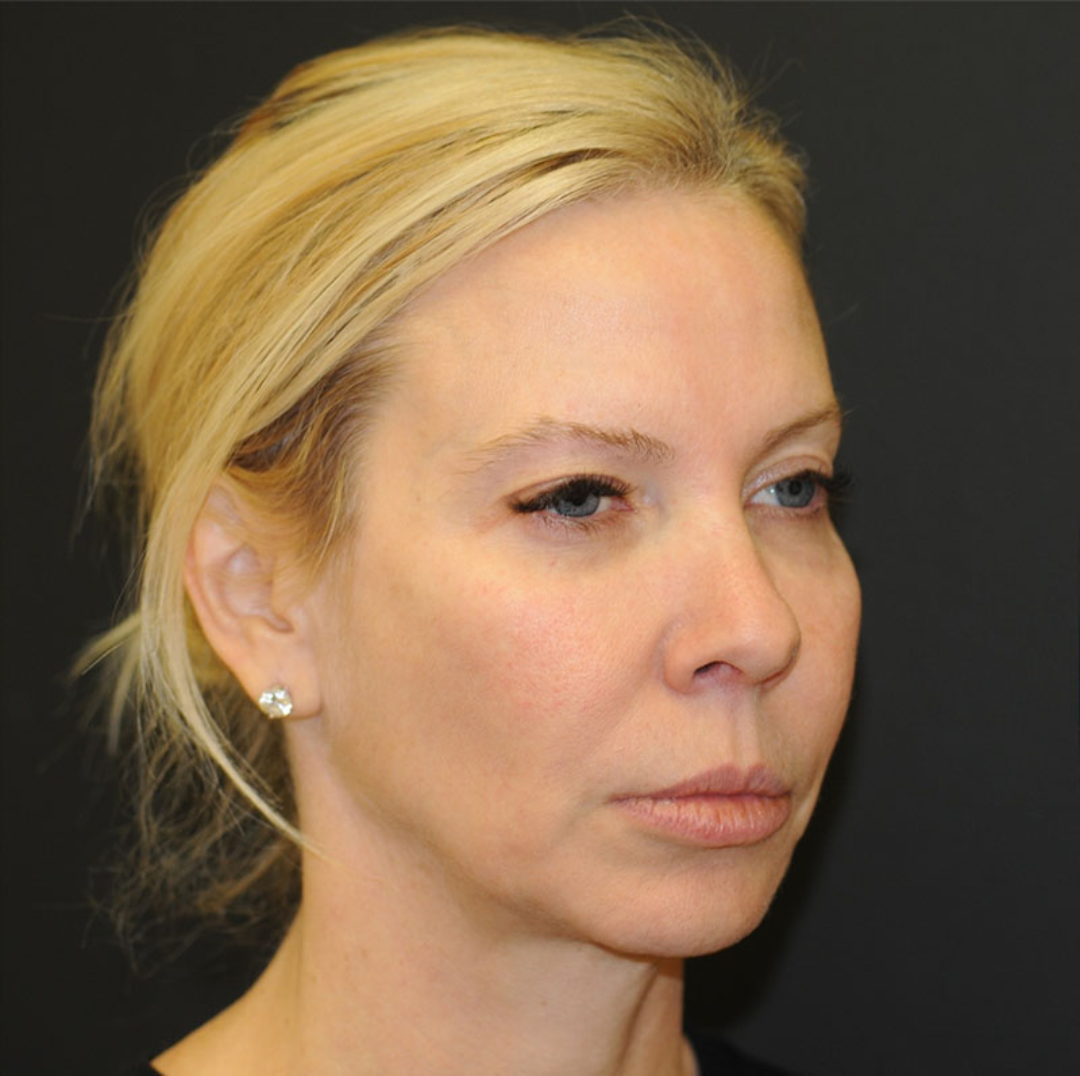
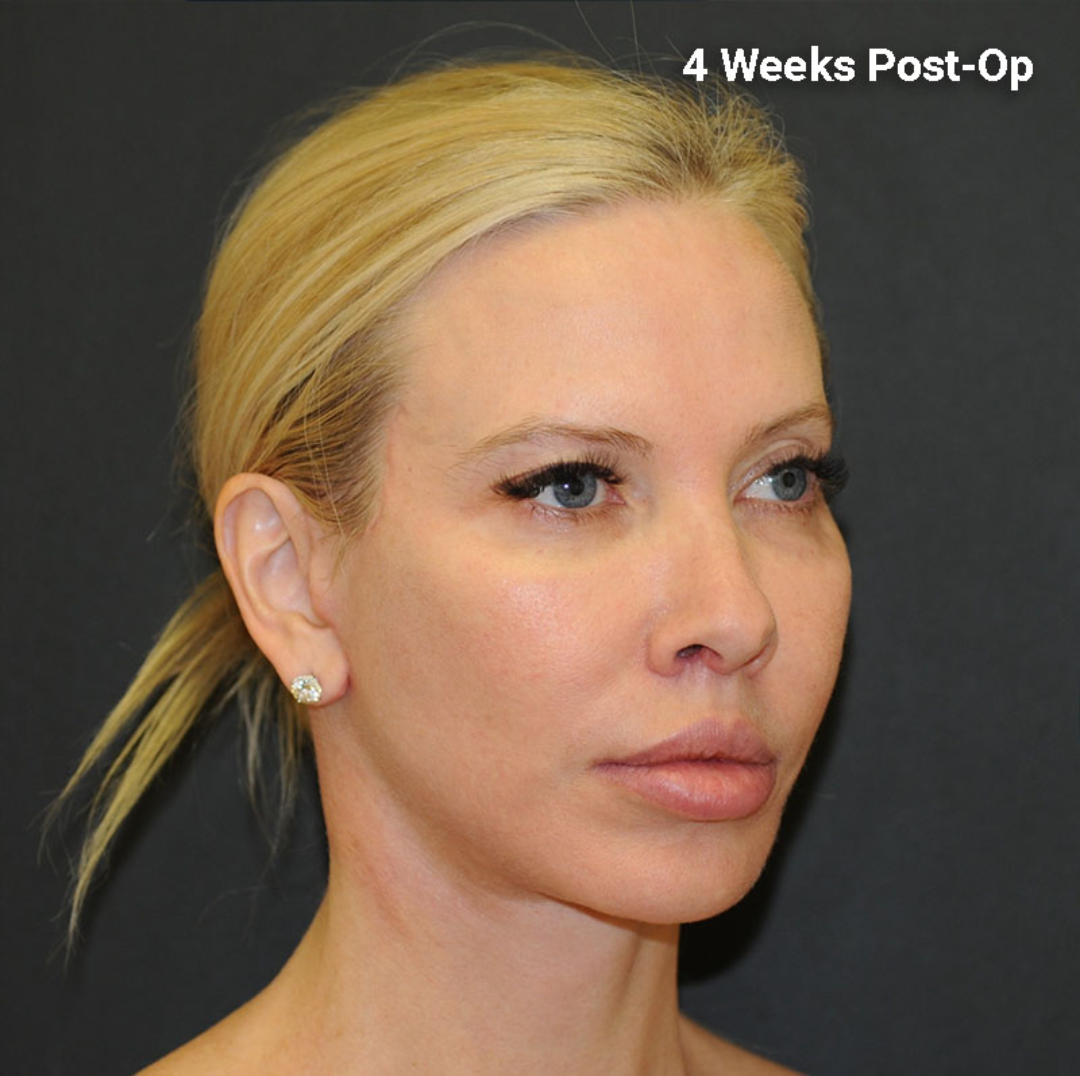
Gina first called Dr. Anthony Berlet about her neck. Years earlier, a series of CO2 laser treatments had left burns under the skin that formed a painful lump of scar tissue beneath her chin, and its removal elsewhere left a loose “pouch” behind.
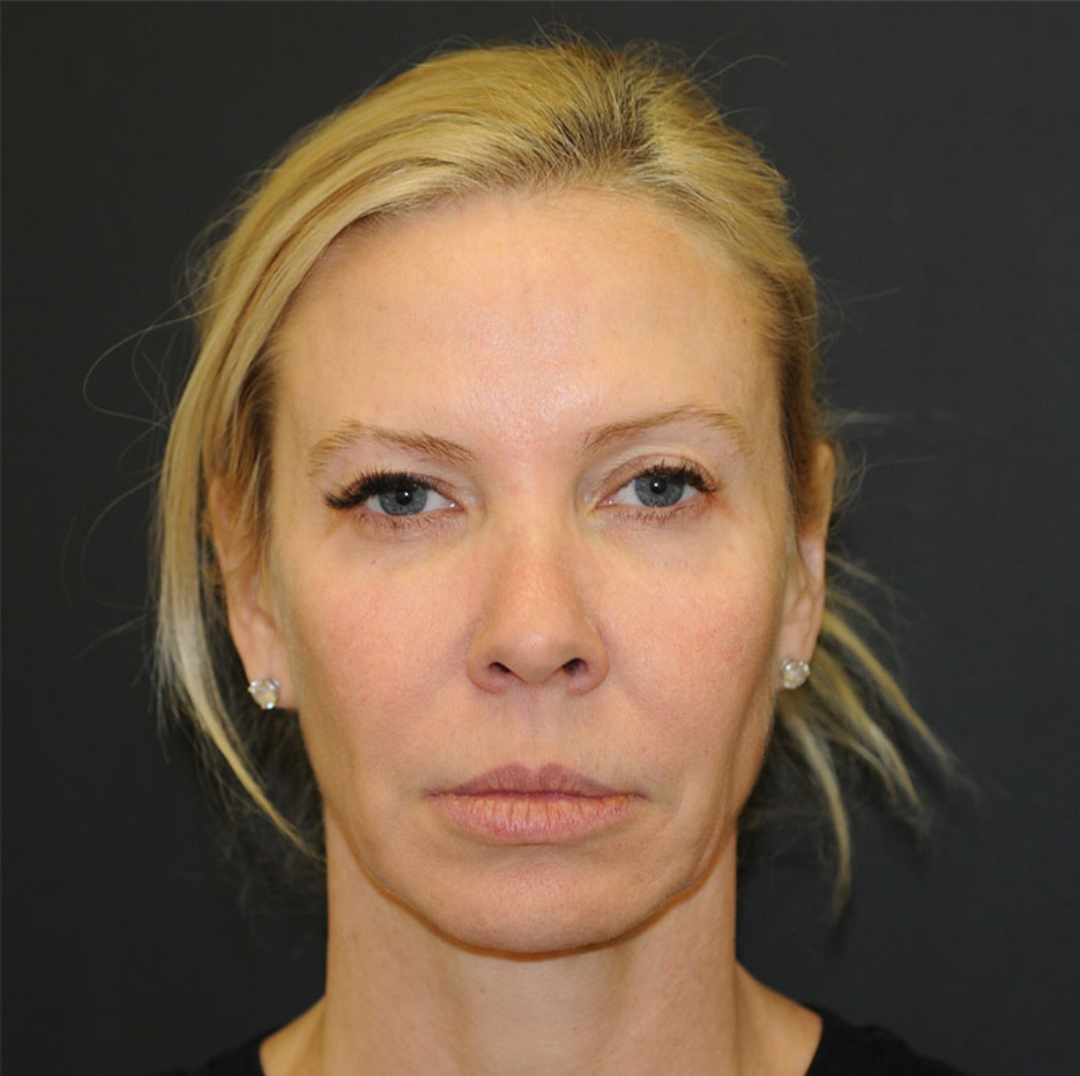
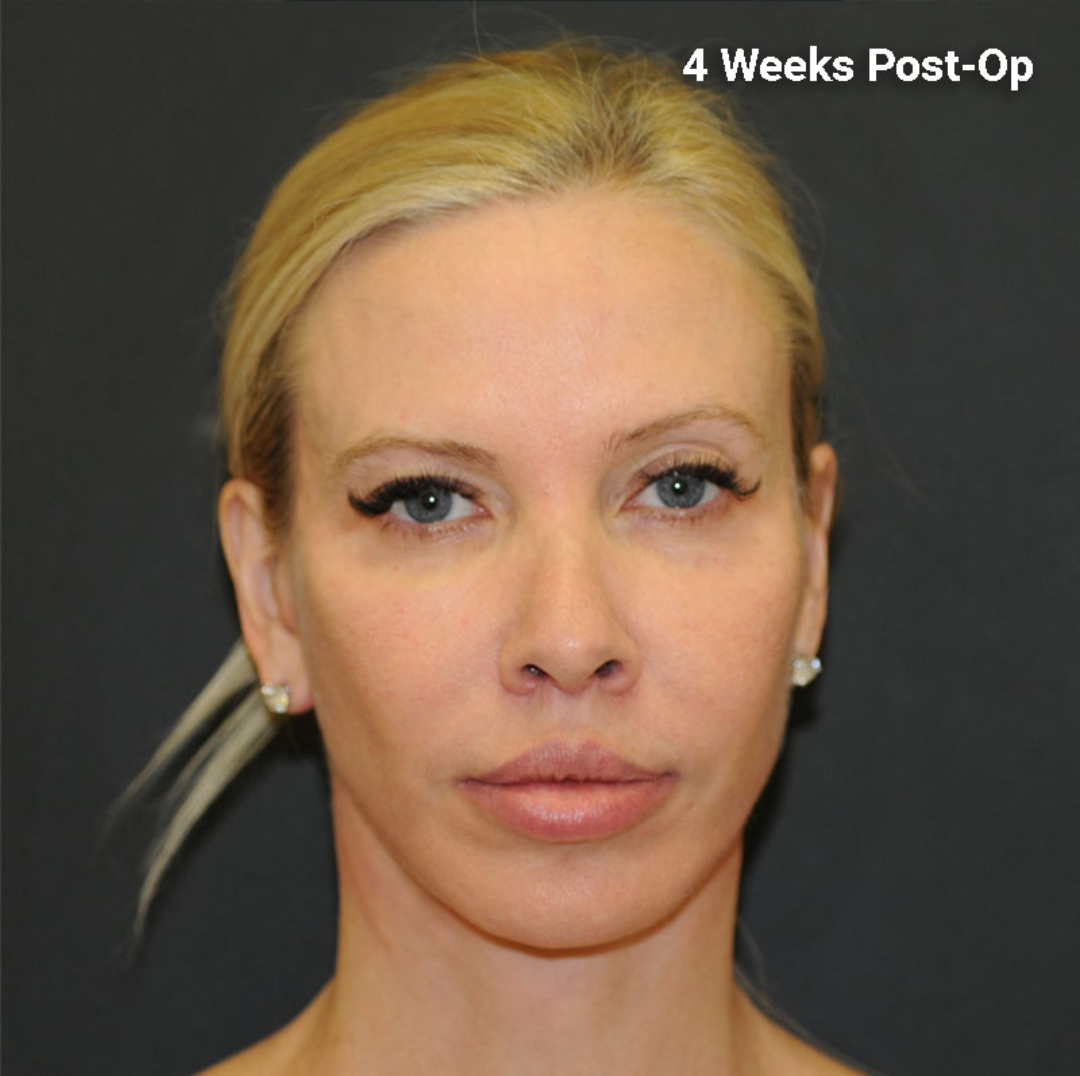
During their video consultation, Dr. Berlet noticed something else: her eyes. In September 2025, an oculoplastic surgeon had repaired Gina’s ptosis (drooping upper eyelids) and removed excess skin, but the result fell short. Her eyelids still sagged, her peripheral vision was still limited, and she felt she looked lopsided.
Dr. Berlet built one plan for both concerns: a revision ptosis repair with cosmetic upper and lower eyelid surgery, together with repair of her neck. The surgery was done in his office under local anesthesia with light sedation, and Gina describes her recovery as easier than she expected.
Today, Gina says she didn’t realize how poorly she could see until her eyes were opened, her scars are hard to detect, and her neck looks smooth again. In this episode she tells host Kerry Berlet the full story, and Dr. Berlet explains what ptosis is, why a ptosis repair can fall short, and how one surgeon can restore both function and appearance in a single operation.
Procedures discussed
Transcript
Kerry: Hello, welcome to season 3 of Once Upon a Surgery. I’m the host Kerry Berlet, wife of world-renowned plastic surgeon Dr. Anthony Berlet. Today we have a delightful guest, Gina, who has quite a story, and I am very interested to hear about this because Dr. Berlet has told me many times that there’s something that happens where when your eyes have ptosis, when they basically can’t open the whole way, right, you get referred often to an oculoplastic surgeon.
Gina: Correct.
Kerry: Right? Because insurance covers it. And so this is something that we’ve really wanted to talk about. So I’m so happy to have you on and hear your story.
Gina: Thanks for having me.
Kerry: So take me back. How long ago was that that your…
Gina: So my eyes, I noticed I was losing peripheral vision, so I consulted with an oculoplastic surgeon on Long Island. He was recommended to me by several people in my local area. So I did consult with him and he said, “Yes, you have a very strong case. I think your insurance is going to cover it.” At which they were able to get it covered by insurance. So we scheduled it for September.
Kerry: Okay, last year?
Gina: Yes, September 2025.
Kerry: And then the goal, do they care? It’s just for function?
Gina: Well, it was for function, but he also said, you know, because it’s basically, I guess, a loose muscle that’s not sitting high enough to keep your eye open, he was going to do a blepharoplasty also to remove the excess skin. And it goes through the same incision, so the insurance did cover that because he was going to be in that incision anyway doing the ptosis surgery.
Kerry: Right, okay.
Gina: So, with that being said, he proceeded to do both. And I recovered. It took a little while to recover. It wasn’t as quick as I had expected. But I did recover, but I did not have the results that I was hoping for.
Kerry: Oh, really?
Gina: [inaudible] had very loose muscles.
Kerry: [inaudible] literally couldn’t see the whole way, and you couldn’t look to both sides?
Gina: Yeah, I did gain some vision back, but I didn’t have that full peripheral vision like most people have.
Kerry: Oh, wow. And how long ago did that start happening where you really…
Gina: That I really noticed it? Yeah. I would say probably around 50. And then it just seemed like it was getting progressively worse over time.
Kerry: And do you mind if I ask how old you are?
Gina: I’m 60. I turned 60 in March.
Kerry: Wow, well, you’ve had work done, which we’ll get into. I was like, wow, I get it. Amazing. But so that was 10 years that the eyes were…
Gina: Yeah, they were starting to, you know, I started needing glasses, and the more squinting and straining, I think, probably did not help my issue.
Kerry: Okay. And so that was the result. So what was the next step? You weren’t thrilled, but that was the result, right?
Gina: It was better than it was before. Insurance covered it. I’m not a vain person, so I figured that was going to be the best I could get. I didn’t like the way I looked because I did look lopsided. I think one side was higher than the other and this eye just was not opening the right way. So it was bothersome, but at that point, what was I going to do? I wasn’t going to ask him to do a revision. It definitely was better. So I wasn’t planning on addressing my eyes again.
Gina: What I had done many years ago, my mother was still alive at the time and she begged me not to do it. But of course I didn’t listen, and I saved up enough money, because it was a special at my dermatologist’s office, to have CO2 laser done on my skin. I was always a sun worshiper, and I was concerned about the aging process on the skin plus any abnormal cells. I wanted a fresh start.
Gina: So my dermatologist said, “You’d be a great candidate. Let’s do the CO2. We’ll do a series of three,” which we did. They were done a month apart. Between the second and the third, I went back for the third treatment, but I had a couple of red bumps that were swollen and just didn’t seem right. And I said, “If you want, I can take all this numbing stuff off and come for another appointment if you don’t think we should do it today, because I already have these bumps.” And she was like, “No, no, it will be fine.” She proceeded to do the third treatment, but apparently from the first or second treatment I was left with subdermal burns. So the third treatment just made it worse.
Kerry: Oh, no.
Gina: [inaudible] under the skin from the CO2 apparently being too hot on the area that she did.
Kerry: Wait, and so shouldn’t she have known? There was no sign of blisters?
Gina: Right. No sign of external blisters at the time, but I was getting a bump and it was painful. She apparently didn’t know how to adjust the temperature. [inaudible] get to the neck, I guess it’s not supposed to go so deep and hot.
Kerry: So that was in your neck area, I guess. Okay.
Gina: So as a result of that, the scar tissue under my chin developed into a ball, and it was very painful to the touch.
Kerry: Oh, no. It gave you like an Adam’s apple or something? A scar?
Gina: It was like a bump on your skin. It was disgusting. And so I lived with it for a few years, and I decided I was going to consult with a plastic surgeon on Long Island to see if I could get it removed because it was painful. He said, “Yes, I can remove it. We’ll stitch from this way to this way so that we can remove it, and the scar will slide into a crease.”
Kerry: So was the texture almost like removing a tumor?
Gina: No, it was really just a ball of scar tissue at that point, and it was small. We proceeded to go into the surgery. My husband was in the operating room. In his office he had a surgical suite, and he numbs me up, so I really couldn’t tell you what was going on because I was numb.
Gina: And when I was done, I got up and realized I was cut from here to here, 14 stitches for a tiny little ball. I wouldn’t question why there were 14 stitches, but he cut this way. And anybody that knows anything knows you really can’t cut the neck that way without the scar never going to lay flat. Which then made the situation much, much worse, because he left me with a pouch under my neck, and there weren’t many good things left at that point, Kerry. I had a good neck. Then I didn’t.
Gina: I was very upset, and I lived with it for years. So it was something that I really wanted to address. My husband supported me on my mission to find someone to address the scar. Not even so much the scar. It was the deformity in the neck, because I looked like I had a pouch.
Kerry: Oh, wow. So all of a sudden it went from a ball, now you have a scar, and then…
Gina: And a pouch, right. Like a very loose turkey neck.
Kerry: That’s so frustrating. And that really makes you just look heavier when you have that, right?
Gina: And you know what? Like I said, I’m not a vain person, but I didn’t even like the way I looked in the mirror when I looked at myself. It really bothered me a lot.
Kerry: So this is after the eyes, and you’re like, “I’m finally going to do something about the neck”?
Gina: Yeah. So I consulted with a few doctors. We’re working people, not very wealthy, a regular middle class family. And I was like, I don’t know if I’m going to be able to afford this, but I have to try. I have to see if I can find somebody.
Gina: So I consulted with several doctors, and met with a doctor in the city. She said, “We can definitely get this done. Let me see if we can get some of it covered through insurance. This way you’re not stuck paying a large bill.” Which they were supposed to. They’d given me a quote, and it said $6,000, but when I did a virtual with her after my initial consult, I told her, “Thank you for working with the insurance to get this covered.” And she said, “Oh, it’s not 6,000. That’s wrong.” And so they re-uploaded a new quote, and it was much, much higher.
Kerry: Oh, wow. Do you think that was intentional?
Gina: I don’t know if the right hand didn’t know what the left hand was doing. Were they communicating, the people processing the insurance and her? I don’t know. But I said, “If they can’t get this part right, they’re certainly not touching my face.”
Gina: But I cried, because I thought that was my only hope to get it done. And my husband was like, “I’m so sorry. Don’t cry. It’ll be all right.” And in that moment, I had been following Dr. Berlet for a long time.
Kerry: Oh, really?
Gina: [inaudible] Manhattan. I just said, “I’ll never be able to afford him. Let me call and see if there’s anything he can do with this pouch and this scar.” Never thinking that I would do what I did. But I called, Pam answered the phone…
Kerry: She’s so lovely, right?
Gina: She’s great. And she said, “He’s going to be here in a few minutes. Let me have him call you back,” because I told her a little bit about my story. So he called me back. He actually FaceTimed me. That was the first time I had talked to him. And he has been one-on-one ever since. He said, “I want to take care of you. I want to get this right. I feel terrible for what you’ve been through.”
Gina: So we pretty much did the first consult on the phone, and he told me what he would do. And he said, “The only way I can fix the neck is if you let me fix your eyes.” And I said, “I just had my eyes done in September.” And he’s like, “No, you did not. They’re not good.” So he said, “I have to fix your eyes. I think that’s going to make you feel so much better.”
Kerry: See, this is my first time meeting you. Your eyes look so… well, they do now. It’s hard to imagine what they looked like.
Gina: Yeah. I couldn’t even really wear eye makeup because it just wouldn’t stay on. I had very hooded lids, genetic. My mother did, too.
Kerry: But that’s him. When he sees something that bothers him, he really wants to get his hands [inaudible].
Gina: And he’s a perfectionist.
Kerry: Yes. Which is great.
Gina: You know, I was on the fence. Am I going to get knocked out? Yes, I’m going to book Manhattan. I’m going to get knocked out because I don’t want to know anything. I’ve obviously been through the mill with surgeons and I didn’t trust anybody. I was a little nervous.
Kerry: And so you were willing to get knocked out, right?
Gina: I was willing to get knocked out because I wanted to know nothing. I didn’t need the added stress of worrying about that part. And I booked it. And Diana and I were going back and forth, and my husband was standing there, about whether I was going to go to Manhattan or do it in the office. He was sitting in his office quietly, staying out of the conversation. But then he got up and he goes, “I’m making the decision. You’re going to do it here, and you’re going to be fine. Trust me when I tell you you’re going to be fine.” And I was so against…
Kerry: So that meant you were going to do it under local, right?
Gina: I did it under a local with a little Valium. I’m not a chicken, but with this I was. I did not want to know anything. And it was the easiest thing I’ve ever done. It’s easier than a root canal.
Kerry: I had mine done recently too.
Gina: But I was prepared, and I had done a lot of research, and it took me years to get to that point. But when you find the right person, and I felt so comfortable with him right off the bat, and I could see he really cared…
Kerry: That’s great.
Gina: That meant everything to me. And it’s been that way through the process of the surgery, the little bit of awareness that I had. They had me laughing, and I said to them in the process, “I feel like I’m at a spa. I can’t believe I’m in the middle of having surgery.”
Kerry: Right. And there’s music playing.
Gina: Yeah, they’re goofing around, and luckily they made the experience really painless.
Kerry: That’s amazing. And I think it is good that you were awake, because he clearly did a perfect job on your eye.
Gina: Yeah, he was able to sit me up. He was able to check to make sure things were correct before…
Kerry: Right. I imagine that’s just much easier, because you can see what the eye actually looks like.
Gina: Right. Exactly. And at every follow-up he’s fixing and injecting and making sure everything is perfect.
Kerry: And that’s so important too, going to the follow-ups. Of course, obviously, it’s my husband, but even after, sometimes there are cords that need injecting. There’s sometimes a couple more tweaks you’ve got to do. It’s all about perfection.
Gina: Yeah, and I have several [inaudible] that went through the process of having a deep plane face and neck lift just before me and just after me, and they did not have the same experience. I feel like Dr. Berlet is more of a boutique, hands-on type surgeon.
Kerry: He is a private doctor. It’s just his practice.
Gina: Yes. You know you’re going to get him. We drove in every week for I don’t know how long, because he did not want to do a virtual. He’s like, “No, I need to have my hands on your face. I need to feel the scars. You need to be here. I can’t do this virtually.” So we came in week after week from Long Island into Jersey to see him, because he did not want me going too long without him actually seeing what was happening as I was healing.
Kerry: Yeah. And again, just meeting you, I can’t imagine what it was like before, because your neck looks beautiful.
Gina: Yeah, 99% of it is gone. There’s a tiny little spot because the scar is still there. We didn’t address that, but he did address the internal part of why it was so slouchy, why it was hunched over. So I feel like he took a lot of years off my face, and obviously your confidence is back.
Kerry: 60. I mean, that’s amazing. And with a CO2 laser, is that common? I mean, I never heard of it.
Gina: [inaudible] after the fact, the few doctors that I did meet with after it happened, to try to figure out what went wrong and how I could get it fixed, did say that it’s not uncommon, if it’s in the wrong hands, to have this happen. So unfortunately I was one of the ones. And my mother begged me not to do it. She begged me before she passed away, “Please don’t do it.” What mothers always say: “You don’t need it. You’re fine the way you are.” But it was something I wanted to do to address the aging skin. And she was right.
Kerry: Well, at least now it’s all been fixed, right?
Gina: You wind up being where you’re meant to be, and I feel like I landed in his hands for a reason.
Kerry: And I think it’s so… between that and then also just an education about your eye situation, that everybody assumes if you have this issue you should have to go to an oculoplastic surgeon.
Gina: For me that certainly wasn’t the case. When you’re doing this, and you probably didn’t have to go through this because you’re married to him, you do a lot of research. You ask a lot of questions. You speak to a lot of women that have gone through the process so you can learn what to expect, what to be prepared for. I don’t want any surprises, right? And a few people that I met along the way have had major issues with their eyes going to the same ocular surgeon that I went to. Some very successful cases, but more often than not I’m hearing that people are having issues.
Gina: So I would say to anybody thinking about doing this, don’t let that be the thing that makes your decision, because going to somebody where you can see their work, you can see the progress and the improvements, that’s major. Oculoplastic surgeons may have your eyesight first and foremost on their list of priorities and maybe not so much aesthetics, but they go hand in hand. If you can see great, but your eyes are upside down or crooked, it doesn’t matter. You’re still not going to be happy.
Kerry: You can see better, but your eyes don’t look good.
Gina: Right. That was my case. My eye could see better, but I certainly didn’t look right. It definitely was not the way it should have been.
Kerry: And I do want to talk with Dr. Berlet, we’ll bring him on, about whether this is common, because I know that’s something specific that he does, ptosis repair. And I don’t know that every plastic surgeon… they all have their own specialties. It’s hard to say, he does pretty much everything, but eyes are one of his favorite surgeries, and I know that doing ptosis repair is specific. He feels that he is excellent at that.
Gina: Yes, he is, for sure.
Kerry: And you have before photos we can see, right?
Gina: Yes, he took them. I haven’t seen them, but I probably will.
Kerry: Or you might even have casual photos.
Gina: Yes, I do.
Kerry: I know people don’t always like to show. They’re like, “No, no, I don’t want to show it to people.”
Gina: Well, when you see the before and after… because some people say, “Oh, you didn’t need to have anything done. You look so young,” or “You look fine.”
Kerry: Yeah, seeing you now, I can imagine you were fine.
Gina: [inaudible] I wanted to feel better about myself, you know. I’ve heard it said a thousand times, and it’s so true, that if the outside doesn’t match what’s going on on the inside, it’s a disconnect. I felt really great on the inside, but then I looked in the mirror and I was like, “This doesn’t match.” I had all this stuff hanging and the eyes were bad, and it just takes the wind out of your sails.
Kerry: And your clients, can they see a difference in you?
Gina: Oh my gosh, a couple have already called him.
Kerry: Right? Well, that’s always his biggest referral. It’s word of mouth, right?
Gina: Everyone knew that it bothered me. I had a Band-Aid on my neck for years because I didn’t want anybody to see the ball of scar tissue. It was horrible. I wasn’t going to shout it from the rooftops, but my clients knew because I was going to be off from work for a couple of weeks, so I couldn’t really hide it from them. As a manicurist, your clients become your friends over the years. I’ve been doing them for a long time. And so everyone was very supportive. They understood why I was doing it. There was no judgment whatsoever. At least they didn’t admit it in front of me.
Gina: And everyone now says they can’t believe how easy the process was for me. I didn’t have pain. I didn’t even need a painkiller. I stayed at a hotel by the office because he wanted to see me the next morning. I took one painkiller that night and that was it. Never took another painkiller after that. I took Tylenol if I felt like I needed it, and I took the gabapentin at night just to help me rest. And I’m not a back sleeper, but I managed.
Kerry: Great. And so it wasn’t painful. What did it look like? Was it probably purple?
Gina: I really… because they give you this bag of vitamins to take. They really do. A month before, you’re set up, and you need to follow the rules. Make sure you follow the rules.
Kerry: I followed them myself.
Gina: Take all the vitamins. You’re shoving pills down to try to get all the right nutrients. And then they give you the arnica gel for the bruising. I really didn’t have a problem. I had a couple little bruises, and one day they said, “Take a comb and just comb it out.” And literally [inaudible], the next day all of a sudden it faded to nothing.
Kerry: Right? Isn’t it so satisfying? When you’re recovering, you’re pretty much at home. At least I was. During the day you’re just kind of…
Gina: You were sipping martinis.
Kerry: I was. I was. But you don’t have a lot… your mission is just get through it. And the comb really speeds up the recovery.
Gina: You have those moments where you’re like, “Oh my gosh, what did I do?” But I knew the reason why I went. It wasn’t necessarily to look younger. That was the added benefit, because he said, “I can’t fix the sag without lifting everything.” There’s no way I could… So I was like, “Okay.”
Gina: But at least he addressed the issue and it’s gone now, and I do feel a thousand times better.
Kerry: I mean, you look like you’re glowing. You look happy.
Gina: And I’m very happy. Very happy. He’s an angel in disguise, for sure.
Kerry: All right. Well, let’s bring the angel in disguise on to talk about the procedure. All right. So we’re here with Dr. Berlet, the angel in disguise. And so I just wanted to talk about: is it common to do ptosis repair as a plastic surgeon? Or is that a specialty you have?
Dr. Berlet: Theoretically, we’re trained to do it. I saw very little of it when I [inaudible] training, later to do it. And I think very few actual plastic surgeons do it. It’s typically something that the oculoplastic surgeons do. But I feel like they don’t always do it that well, and they usually don’t take in the cosmetic reconstruction of the eye as well as [inaudible].
Kerry: [inaudible] a glimmer of this actual surgery, and I remember you saying something vaguely like, “There’s only one stitch and it’s not even the right material,” or something to that effect. I think he was shocked when you went in.
Dr. Berlet: I mean, I was surprised that they actually did a repair, because you had such significant ptosis remaining. It was pretty bad ptosis. And then on top of that, the eyes just looked really tired. They looked really tired.
Kerry: So when an oculoplastic surgeon… did she really only have one stitch?
Dr. Berlet: There was one stitch, and that is typically what you’re taught to do. I like to use two or three, just to suspend it, and just in case the other one loosens up a little bit, which may have been the case, but it was right where it was supposed to be.
Kerry: And so is that a different stitch than what you get with just a regular bleph?
Dr. Berlet: It’s a completely different operation, actually. When we deal with the eye, there’s a muscle around the eye called the orbicularis. That’s a donut muscle around the eye, and that helps you close your eyes. It lowers your upper and it raises your lower, so it’s sort of a snap that pulls them together. And then there’s a muscle inside called the levator muscle that lifts the eyelid.
Dr. Berlet: Now, there’s something called senile ptosis. I don’t think you had senile ptosis. You had it a long time, though, right?
Gina: Yeah.
Dr. Berlet: So it felt early either way. It’s an attenuation of that muscle. So it’s like the blinds are not pulled up all the way. It’s sort of sitting at a lower spot. So you can actually lift it up and then reset the muscle so that the lid’s sitting higher. In the resting position it’s in a higher position, so your eyes are more open.
Kerry: Okay. So if you close your eyes, can we see… I don’t see any scars. I see nothing. Oh, did you also do lowers? Oh wow. Lucky you.
Dr. Berlet: While I’m at it, we’re doing it all.
Kerry: Wow, this is the perfectionist in him.
Gina: You end up getting some things thrown in. He was like, “It has to be done.” But yeah, he did both, and I can’t believe the difference. It’s a tremendous difference.
Kerry: But I don’t see any scars, and this was just in March.
Gina: You’ll see the picture. I don’t even have scars on the side. You see nothing.
Kerry: Yeah, it’s remarkable. That is really remarkable. So where was the cut, where the scar would be if she did have a scar?
Dr. Berlet: The scar is the same as an upper lid blepharoplasty. It’s right along the lid crease above, and it’s right along the lash line below.
Kerry: And you don’t see anything. So it’s the same as any other blepharoplasty? They go in the same incision, right?
Dr. Berlet: For a ptosis and a bleph, the same incision. [inaudible] won’t take the skin when they do the ptosis repair, and that’s an issue.
Gina: Well, when I had it done the first time, he didn’t take enough, because I still had so much skin. But like I said, I really was happy that it was better than it was before. So you leave there thinking, “Okay, I guess this is the best he could get.”
Dr. Berlet: But actually, one of the things that bugs me a little bit is the oculoplastic surgeons claim they’re the only ones that should be doing eyes. And here I am correcting what they’re doing, which I’m not supposed to be doing, according to them. So it’s an interesting concept. It’s a little dig in my side when I hear that.
Gina: Yeah, in my experience, [inaudible] that have had the same experience with an oculoplastic surgeon, and I’ve recommended him because they have gone to the same surgeon and not been happy.
Dr. Berlet: Well, I’m very comfortable with the eye anatomy. I’ve repaired it on every level: upper lids, lower lids, cancer reconstruction as well as cosmetic reconstruction, ptosis repair, ectropion repair, [inaudible], a lot of things. There are so many things that go on with the eye, but if you understand it, you can correct it all, and it’s amazing, the reconstructive value of doing it right.
Gina: I’m laughing to myself right now because I can’t believe I’m sitting on the couch with you two. I watched from Instagram for years, and here I am already on the other side, and now I’m sitting here with you two.
Kerry: With ptosis, who does that happen to and why? Is it a certain age? Do we all end up with ptosis, or what is that actually?
Dr. Berlet: No, we don’t all end up with it, but there are certain people who get a weakness in their lid. You have to differentiate it from some diseases like myasthenia gravis, but for the most part the most common form of ptosis is something called senile ptosis, which is just an attenuation of the muscle.
Kerry: And is that age? I would assume, called senile ptosis.
Dr. Berlet: Typically age. It could be at a younger age, but there’s also genetic congenital ptosis. So there are a lot of factors, and there are varied degrees of ptosis.
Kerry: Are there ever children that need this?
Dr. Berlet: Oh, yeah. Absolutely.
Gina: It really does impede you. I didn’t realize how poorly I was able to see until he opened my eyes. Literally. After the surgery, it was almost like I was shielding myself because it was so much different. It was so much more to absorb. The light, everything. I felt like I had to adjust. Now I’m used to it, but it’s definitely changed.
Kerry: [inaudible] when a kid first gets glasses, and they’ve gone their whole life without seeing.
Gina: You don’t realize how bad it is until it’s fixed, and then you’re like, wow. I used to strain all the time. I’d be watching TV and I’d be constantly squinting and trying to adjust.
Kerry: Wow. And does it make you feel more awake?
Gina: I would say my eyes do feel more open. I also think that it puts a little pep in your step. You feel better about yourself.
Dr. Berlet: [inaudible] factors there. One, we use a tremendous amount of energy if we’re squinting or not getting our eyes up all the way. It’s a surprising amount of energy that you use in your body just to do that. So you feel less tired, and you’ll look less tired. So it’s a double advantage there.
Gina: And I’m very thankful.
Kerry: Good job, honey. And so now, talk to me about what happened with the CO2 laser. Have you seen that before?
Dr. Berlet: I’ve seen scars in that area.
Kerry: And she describes it like a ball of scar.
Dr. Berlet: Well, it was thick, and I think there are a lot of ways to treat it that probably weren’t done the best way. A million ways to skin a cat, sometimes.
Kerry: Right. But if she had come to you before… so she had the ball, or initially there was first the scar, right? And then they…
Dr. Berlet: Well, they put a scar in this way, which is bound to create a web, or a pouch. In her particular case, the face already wants to descend this way, and now you have this thing aggravating it that much more. So it just made it worse. In order to basically attack it, so to speak, I think you had to get everything out of it and then get the skin pulled so that you realize how much of a band you need to fix, because it was already done the wrong way. It would have been nice if it was a horizontal scar versus this vertical scar.
Kerry: But now that she’s had that, there’s one web there, and it’s a lot better. And who’s looking under your chin?
Gina: Well, my husband and my kids say, “You’re lucky you’re short. No one even sees it.” But I know it’s there. And to me, that’s what matters.
Dr. Berlet: We’re going to fix that little web tomorrow. There’s a cord basically going from here to here, because that’s where they did put the scar, and it wants to contract this way. The shortest length is this way. So we can lengthen the scar by literally interposing tissue. We do something called a Z-plasty that will just interpose some tissue so it will hug the cervicomental angle, which is right along the crease here.
Gina: So I’m going to be even tighter than I am right now.
Kerry: These are the perks.
Dr. Berlet: We want to get it right.
Gina: And I appreciate that.
Kerry: And so she was saying that you first FaceTimed her, but did you meet with her in person before the surgery?
Dr. Berlet: Yeah. There were a lot of discussions going on. I met her on the phone, on the FaceTime, and she won my heart right away as soon as I saw her. That was fantastic. She tugged at the heartstrings. I thought, “I’ve got to help this [inaudible].”
Gina: And I said to him, “I didn’t tell you my story because I’m looking for anything. That’s so not me.” But that is my story. And the tired eyes, aside from the issues that I have with the muscles, that was the story of my life. I’ve been caring for people my whole life. And then I found somebody to care for me.
Kerry: Which is amazing.
Gina: I said, “I don’t want to pull on your heartstrings.” My husband takes amazing care of me, but I never thought somebody from the outside would swoop in and make this right. It’s tremendous. You’re restoring my faith in human beings, because these days it’s very hard to find good people that really care about what they do, not just in it for the money.
Gina: He’s been hands-on every appointment. I really didn’t have one hiccup the entire process. I didn’t even have to call and say, “Is this normal?” Everything was so well explained. And he’s been hands-on ever since. Some practices you go to, you’re seeing a PA or nurse practitioner to check your scars or remove stitches. He did everything on his own. And he was happy to pull the stitches.
Kerry: He did that with me, too.
Dr. Berlet: I feel you’ve got to tend the garden, you know. It is a process, and you’ve got to pick the weeds.
Gina: But it shows in the end. My scars are undetectable, and I only had it done in March.
Kerry: You were 5 days before me.
Gina: Yeah, that’s right.
Kerry: So we were just talking off camera, and I learned that Gina owns her own personal nail salon called Perfect 10, in Long Island. And she is basically the Dr. Berlet of nails, where everything is personal, it’s personal interaction, you’re doing everything for your clients. I’m sure you’re very beloved by them. I can just tell.
Gina: I’m lucky. My clients have become dear friends.
Kerry: He puts sparkles on them.
Dr. Berlet: No. No sparkles for the surgeon.
Kerry: But he does always have purple on his fingers. It’s so funny, because he operates so frequently that he often goes out and he still has the purple on his fingers.
Gina: [inaudible] My son was a catcher, and he always had white nail polish on the thumb, right? So they could see the signs.
Kerry: Oh, how funny. I didn’t even know that.
Kerry: Well, anyway, I just want to thank you so much for coming. This is an amazing story, and it’s something that I think is very important. It’s very common for people to have this ptosis issue with vision loss, and they don’t always know that it is an option to go to a plastic surgeon to have it done, so you can not only see correctly but also look beautiful as the repair is happening. So thank you so much. We really appreciate it, and I know Dr. Berlet is a huge fan of you and was really looking forward to having you.
Gina: I feel the same way. He’s the best.
Kerry: All right. Cheers.
Kerry: So I hope you enjoyed this episode of Once Upon a Surgery. Don’t forget to like, comment, share, and we’ll see you next time.
Ready to start your own story?
Meet with Dr. Anthony Berlet to talk through your goals and options.
Request a Consultation (332) 232-5630